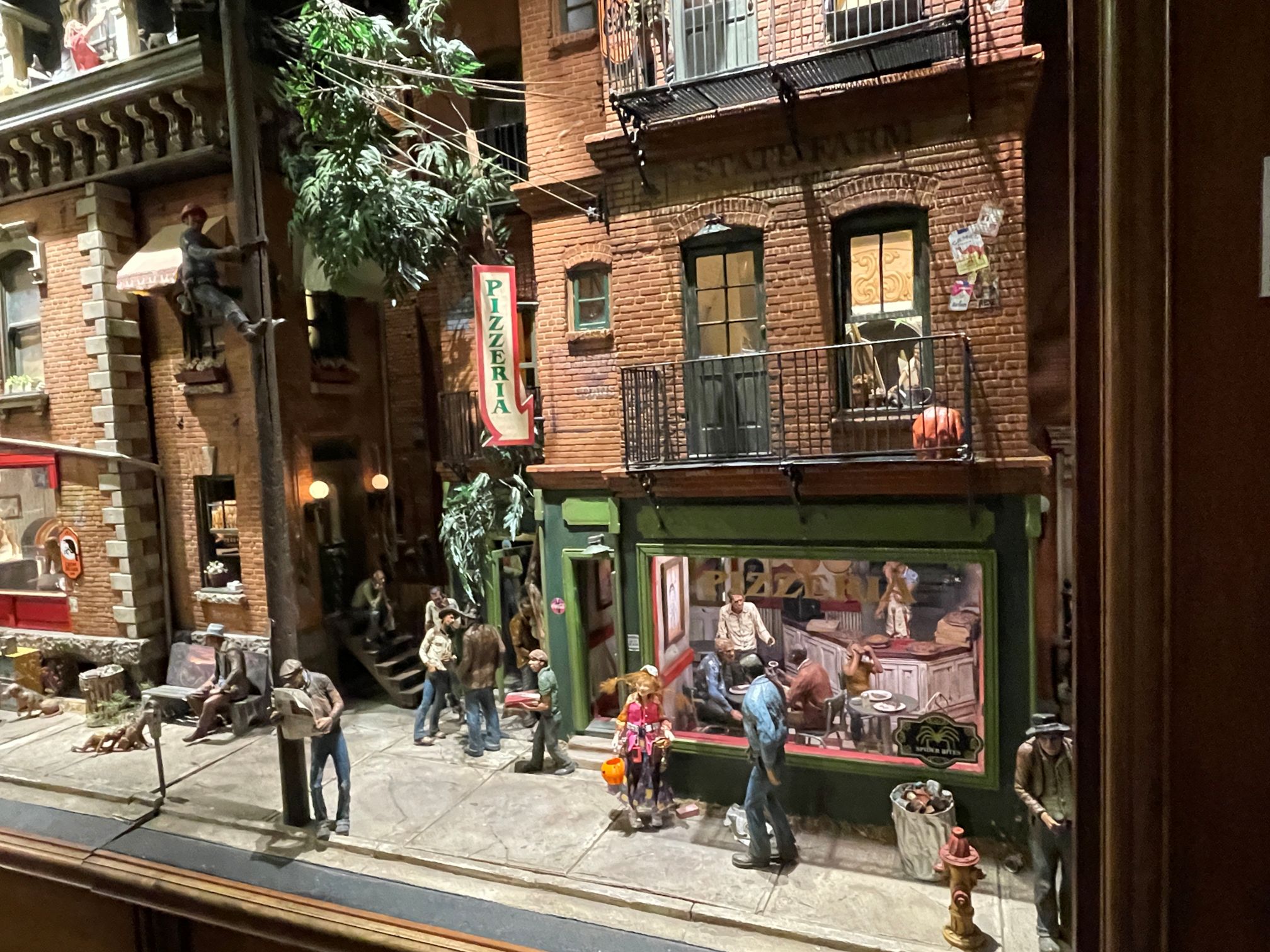
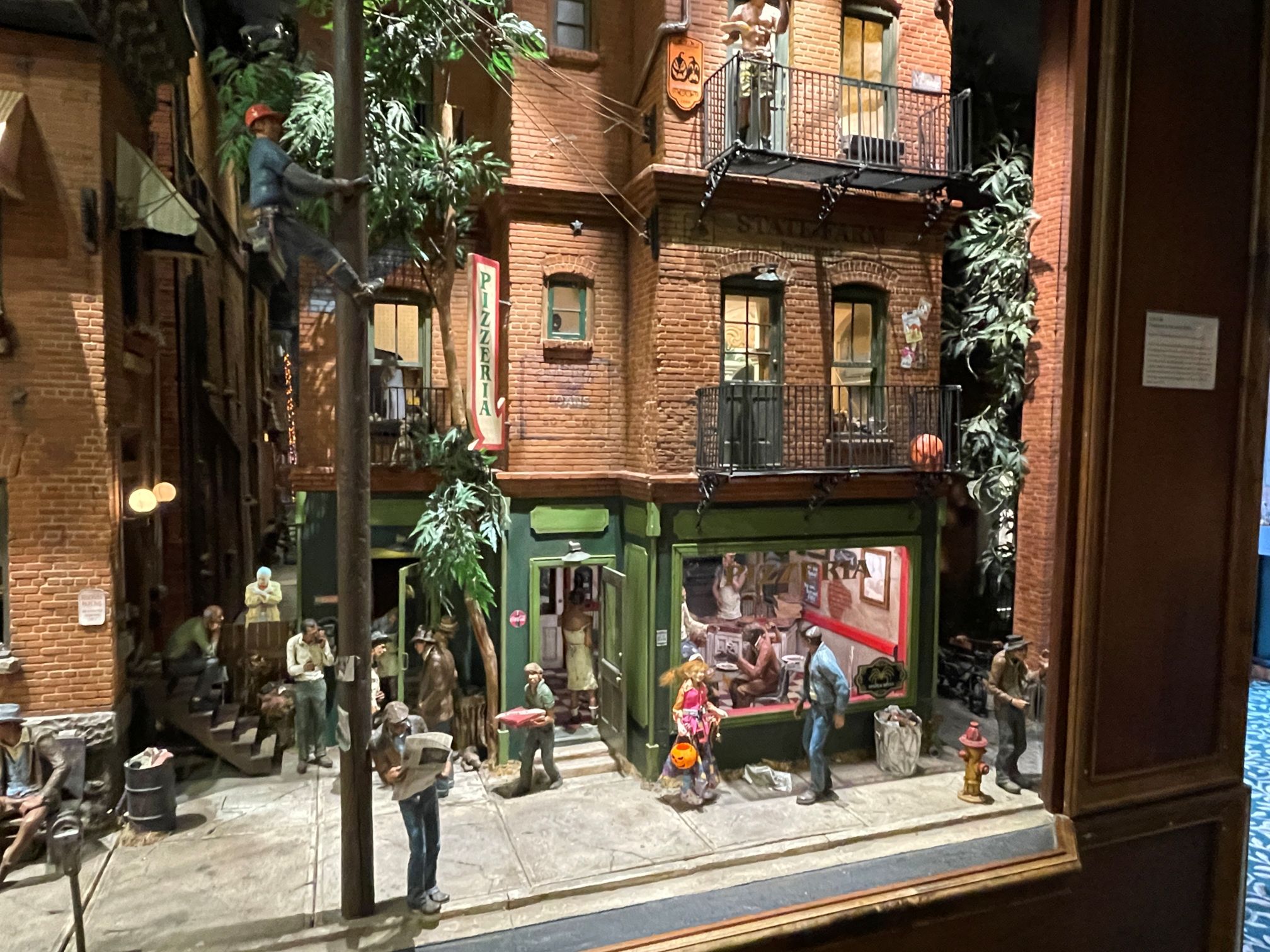
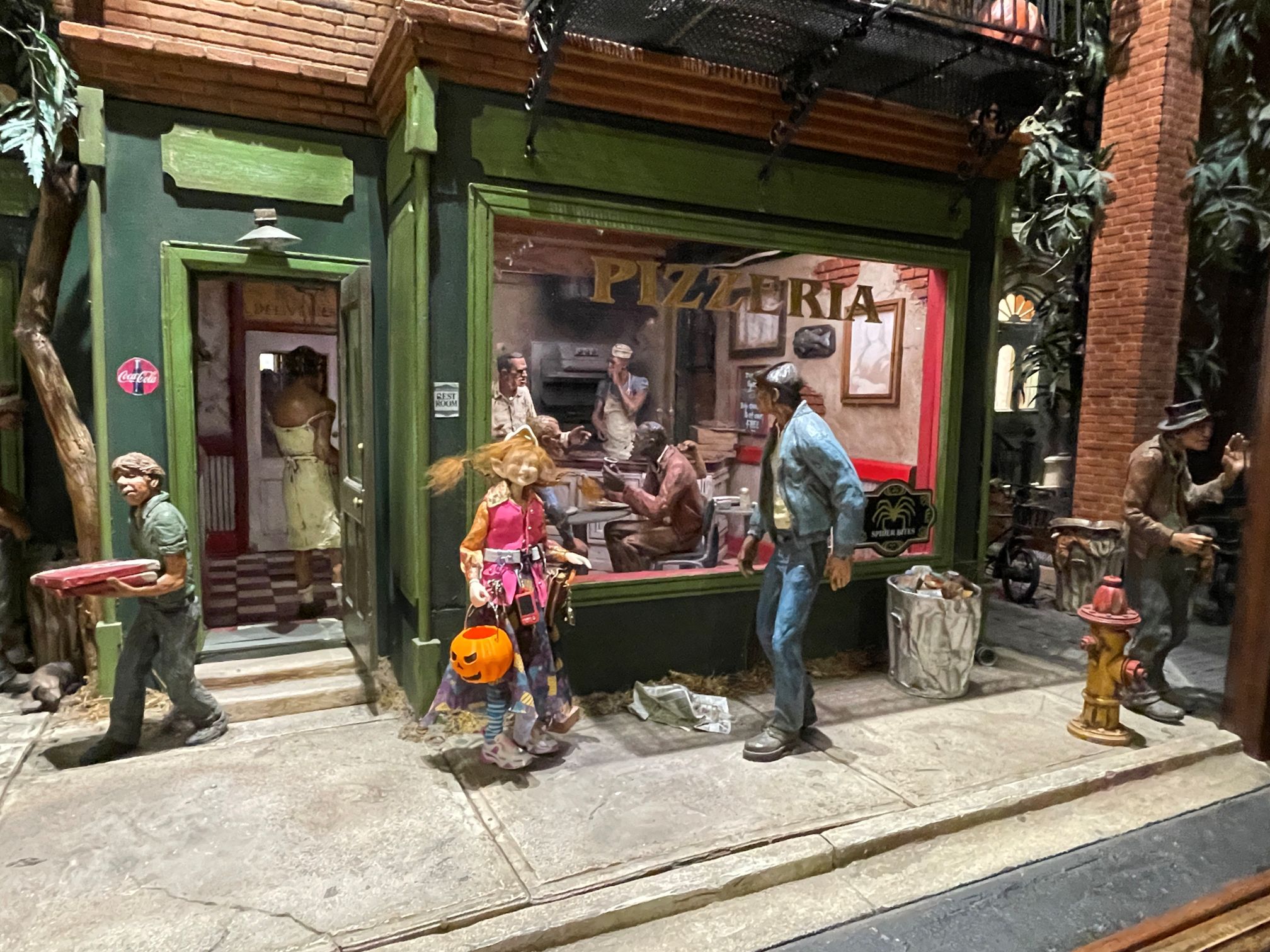
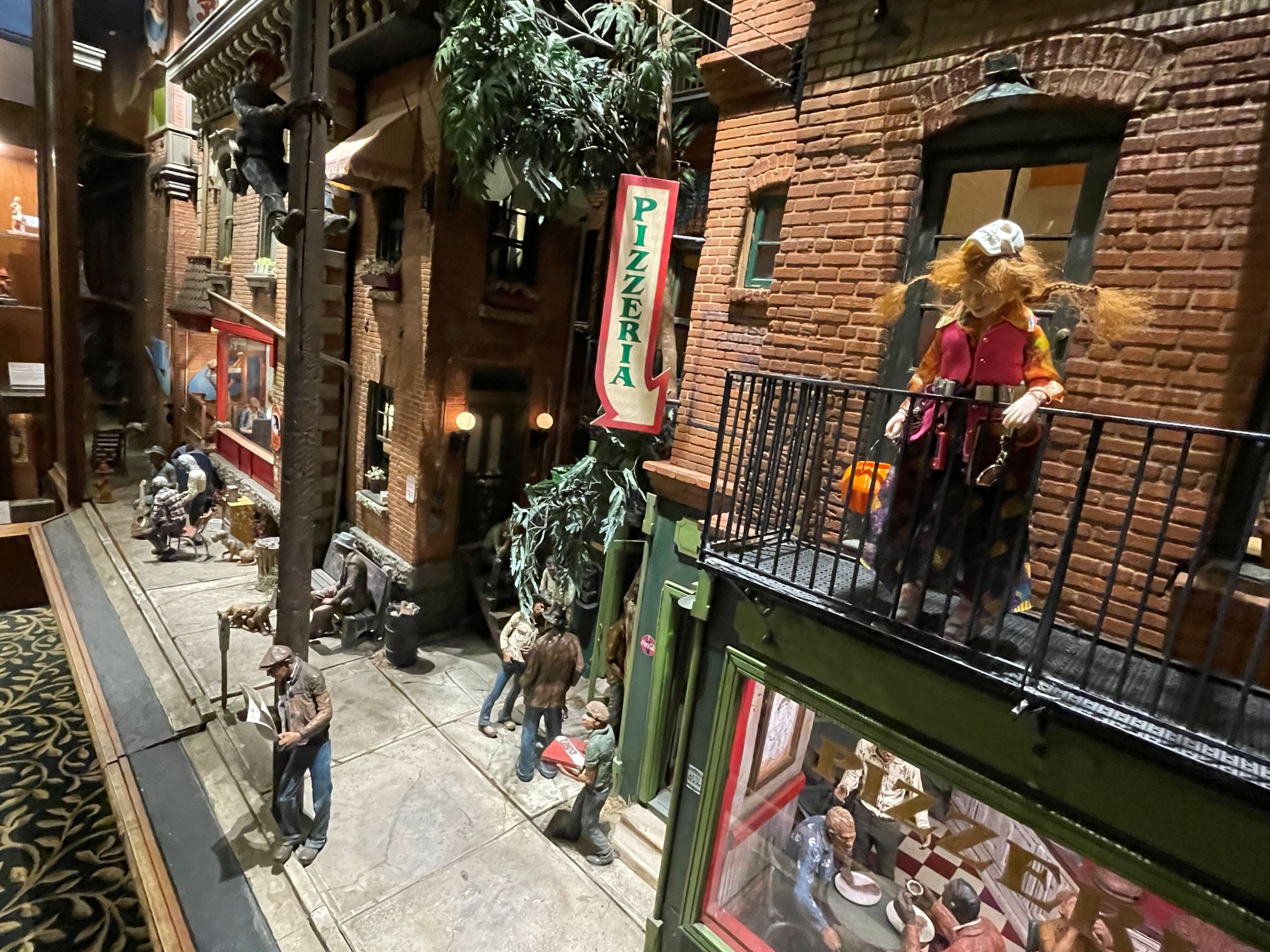
I went to the gallery of Michael Garman, a sculptor of idealized U.S. city streets full of 1:6 scale figures, props, buildings with furnished interiors, and lights. I took along Modern Pippi, hoping to confirm that Magic Town (the streetscapes) were really 1:6 scale and exploit them as scenes for photos if they were.
1:6 scale is not that common a scale to work in, even though the ubiquity of 1:6 scale fashion dolls like Barbie by Mattel probably skew our perceptions. I don’t know of anyone who makes 1:6 sets besides us and a few YouTubers. All of this is to say that the Michael Garman gallery gave me an opportunity to view the miniature world of another 1:6 scale enthusiast and to see his philosophy at work in his art. Of course, I find such glimpses into artists’ minds fascinating and revealing, particularly when their art is similar to mine.
My conclusion is that people’s miniature worlds reflect their creators. For example, my dolls are mostly white people with eclectic, comfortable, loudly patterned style. They use mobility aids, have a variety of genders, read and write and play with dolls frequently, and regularly do playful and silly things.
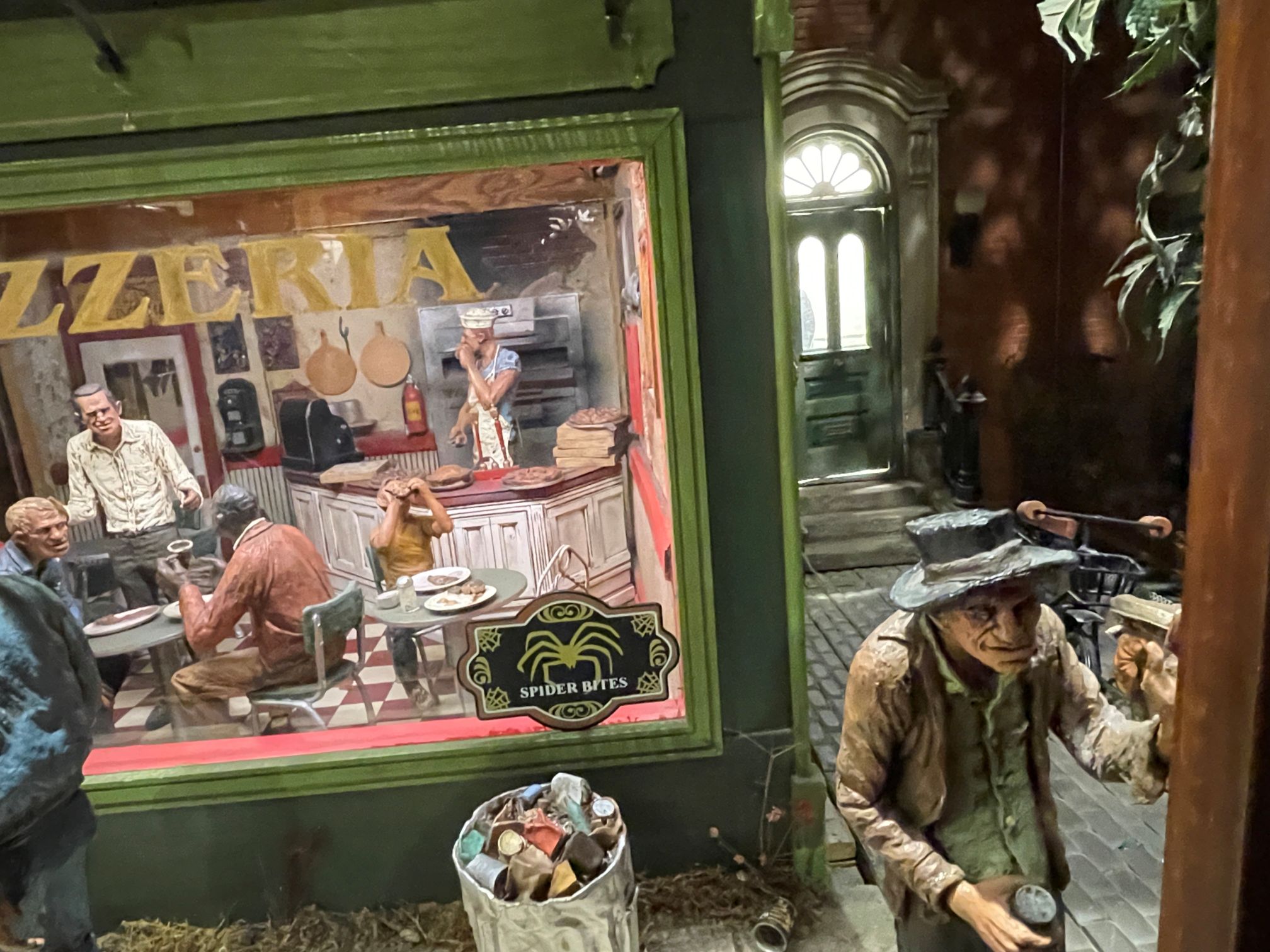
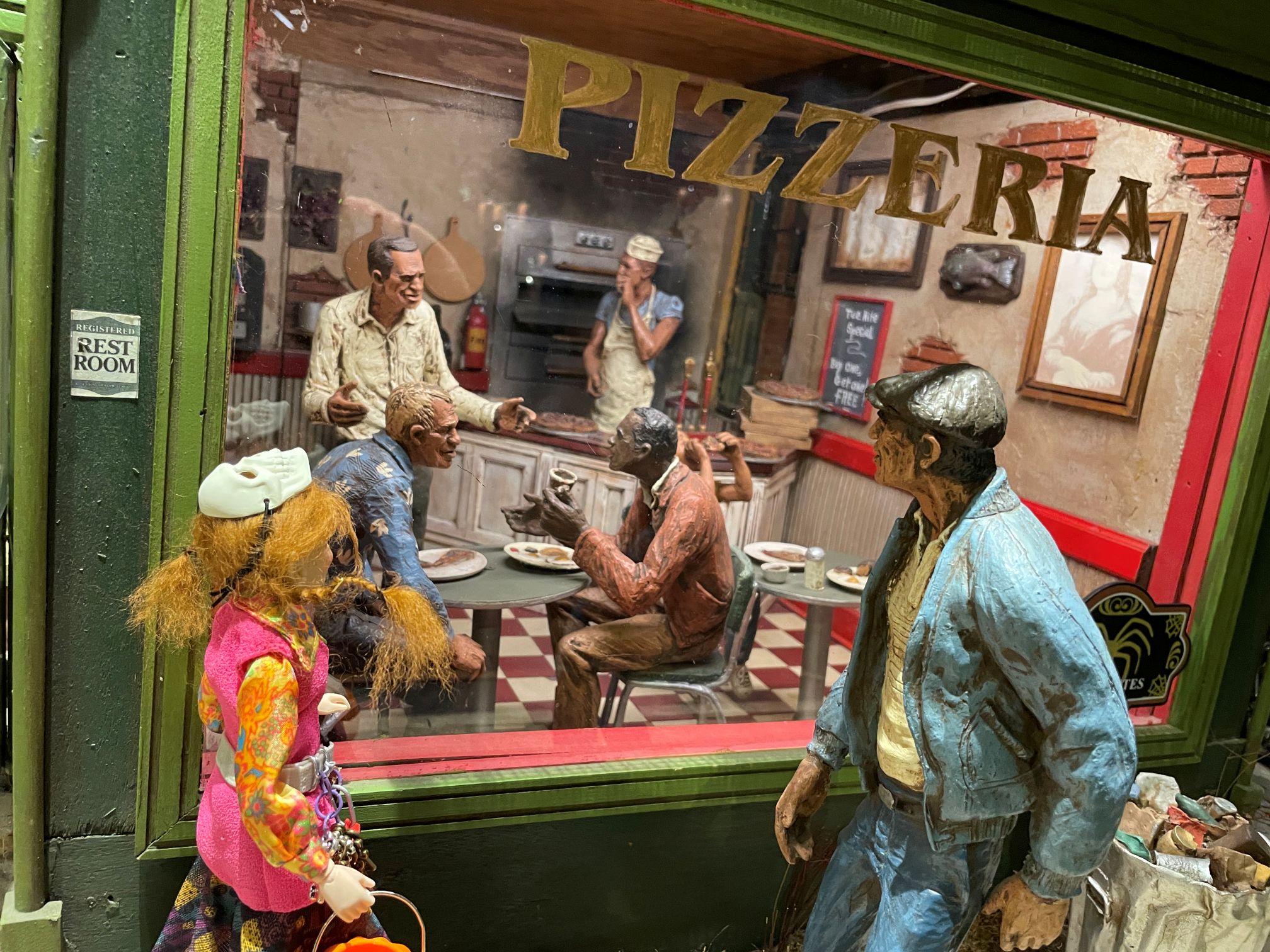
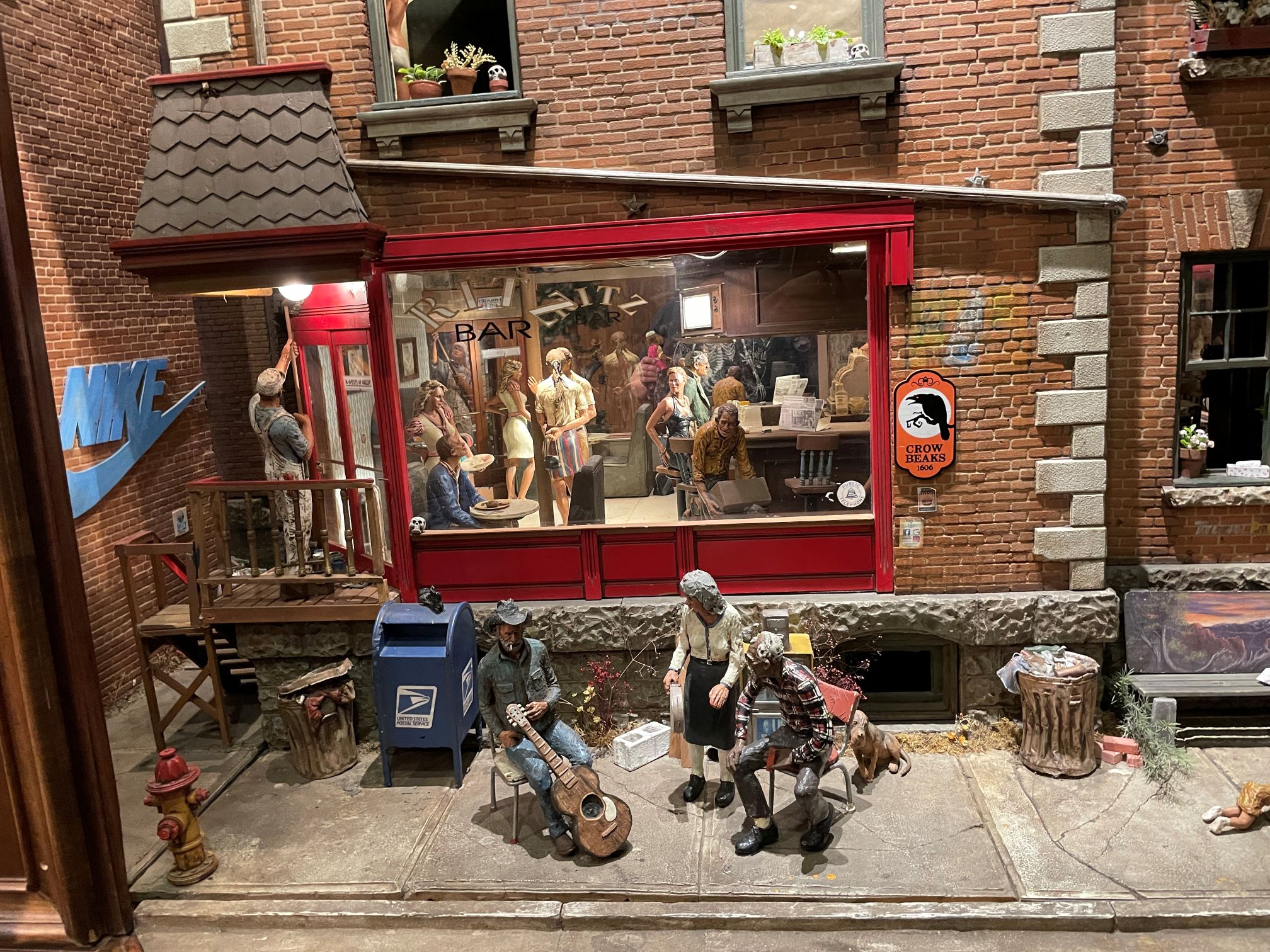
Michael Garman’s figures live in a bygone haze of nostalgia made of cigarette smoke and the miasma from piles of trash on every corner. His city streets are populated mostly by middle-aged white guys. Occasional women are either young and scantily clad or old and dumpy. Babies and toddlers do not exist. There are white people and black men, and that’s it. Nobody with visible disabilities exists. I’m certain that they all vote Republican and uncritically support the military industrial complex and the police. (I’m extrapolating based on their creator’s pride at being photographed with several George Bushes.)
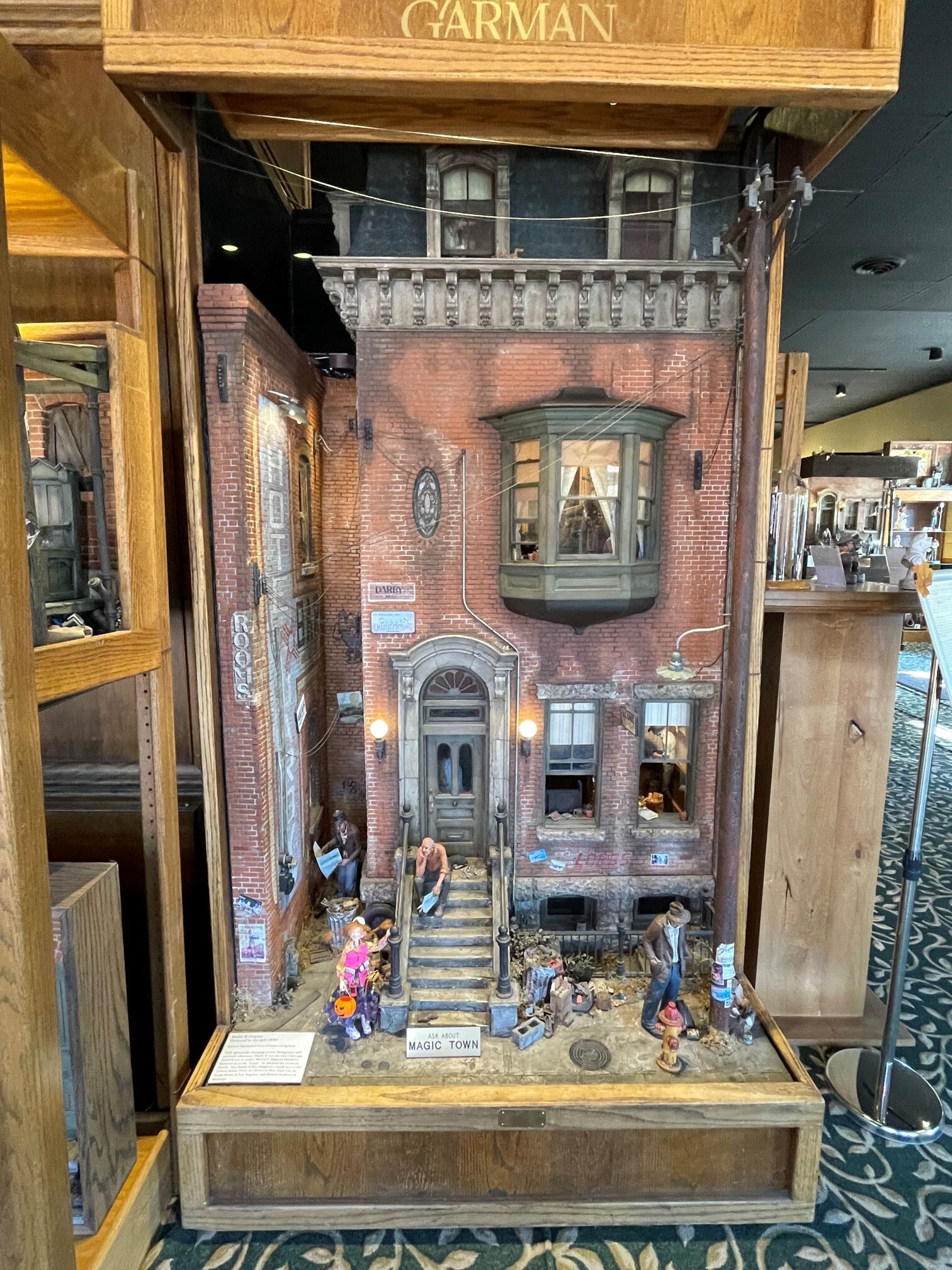
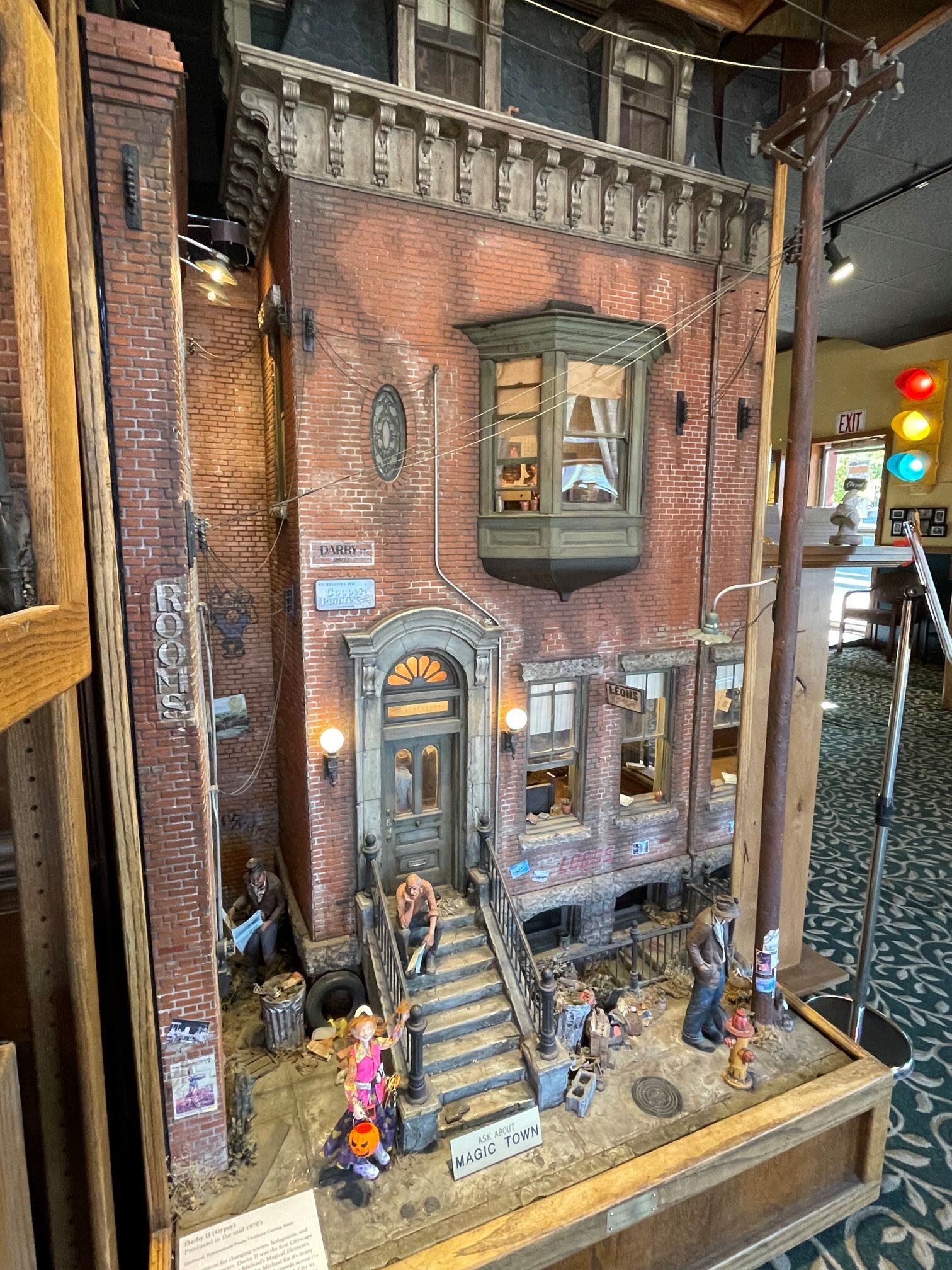
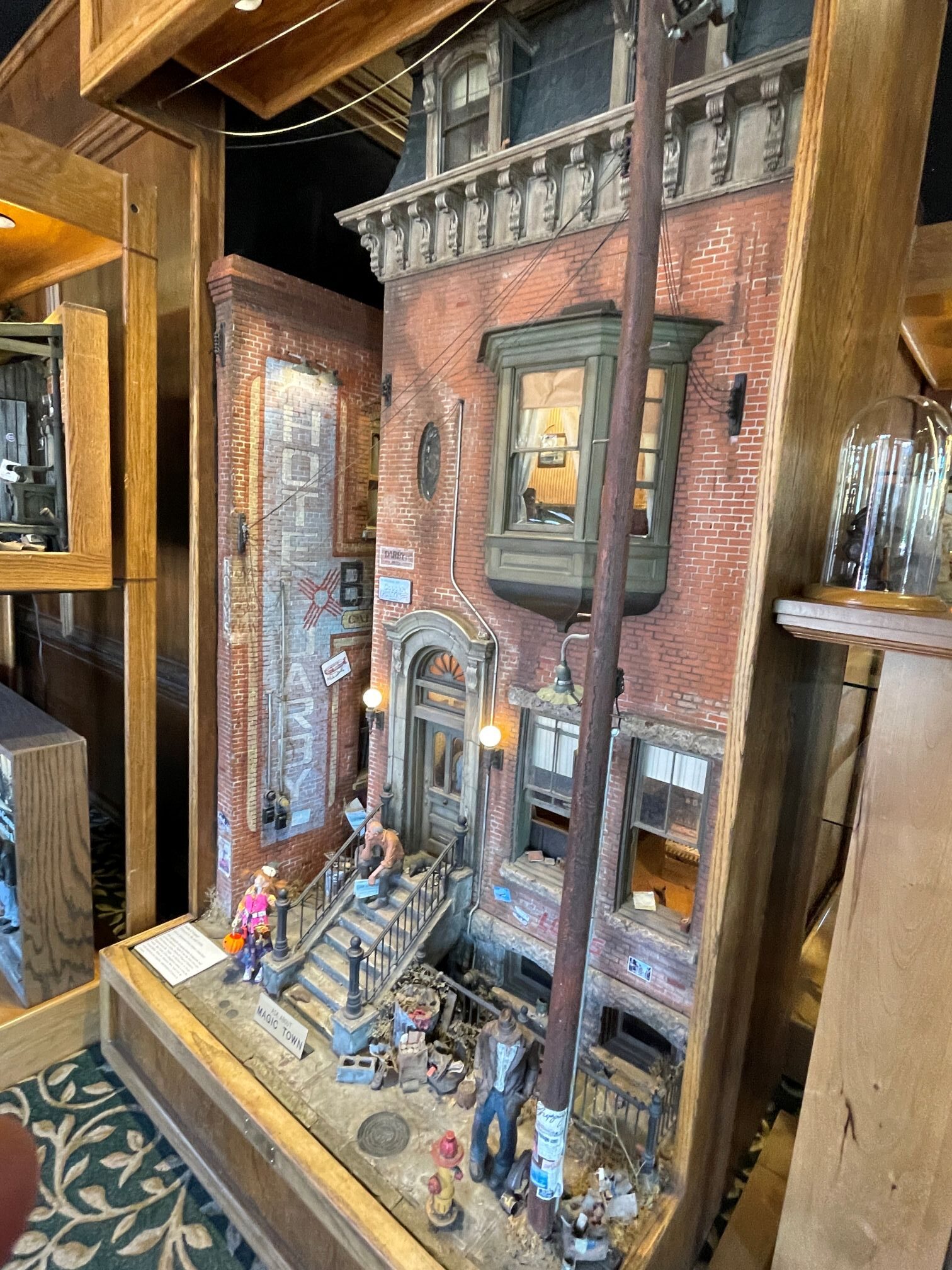
Garman [1938 to 2021] grew up in Texas and made his way to the Colorado Springs area in the early 1970s. His figures were sculpted from “microcrystalline wax-based clay,” according to michaelgarman.com, from which latex molds were made. The molds were filled with Hydrocal [white gypsum and cement] for the figures or a compound of casting resin and marble dust for the props. His buildings were made from lightweight polyurethane foam.
Garman’s About the Artist page states that the “sculptures are not portraits but are composite sketches of bits and pieces of humanity that Michael encountered along his travels.” Additionally, the site says that, “from Texas, Michael traveled to Los Angeles where he briefly apprenticed in photography. From there Michael continued his travels into Mexico, Central, and South America. While traveling Michael met and lived among the working people, capturing their lives in sculpture, on film, and in his heart.” In summary, the gallery advances the interpretation that Garman’s gallery captures “bits and pieces from humanity” from “the working people” that so captured his heart. The fact that Ronald Reagan collected his stuff is supposed to add prestige to his work. The ad copy works really hard to position him, as his obit describes him, as a sculptor “capturing the heroic American spirit.”
All photos can be enlarged by clicking on them.
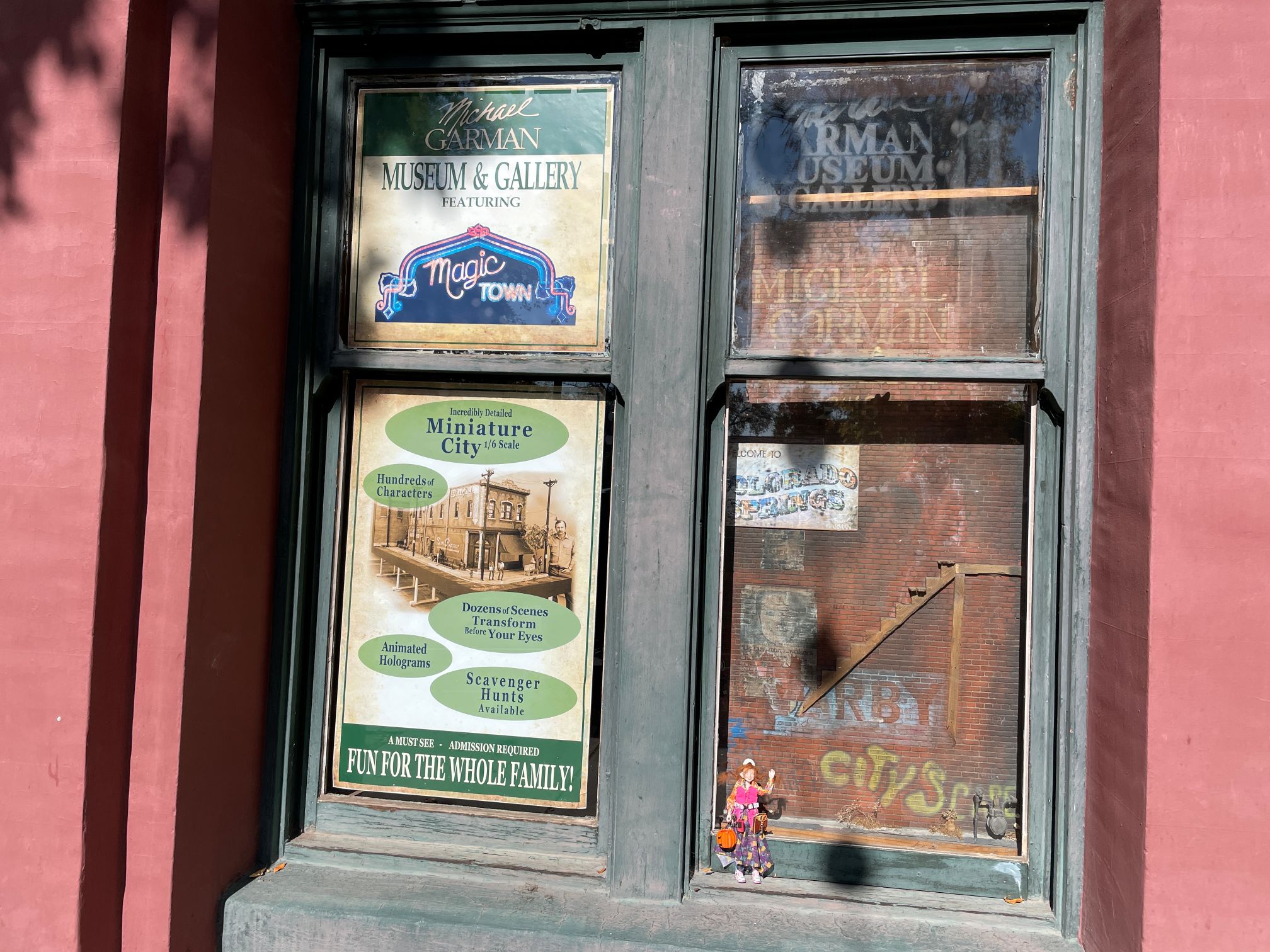
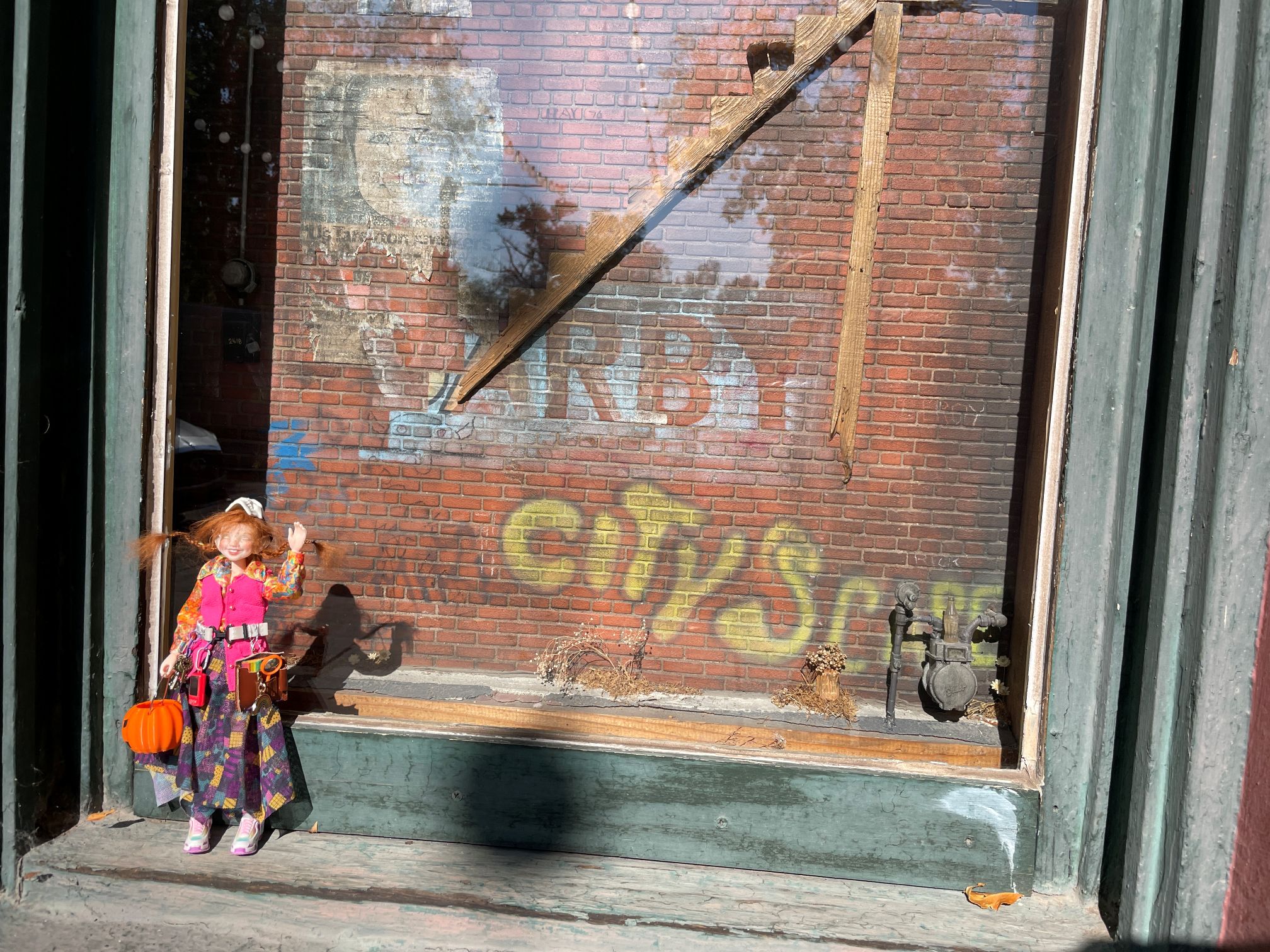
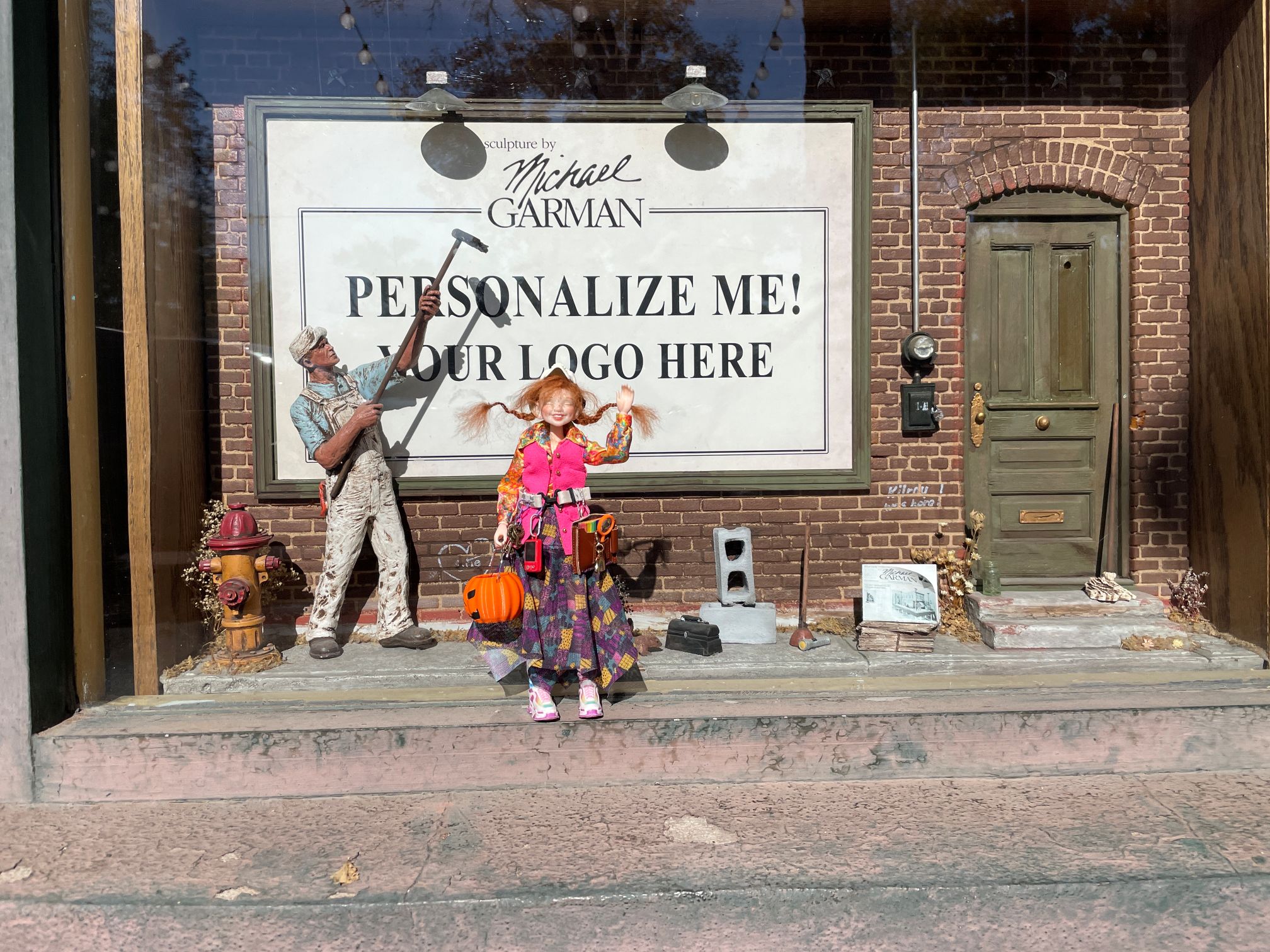
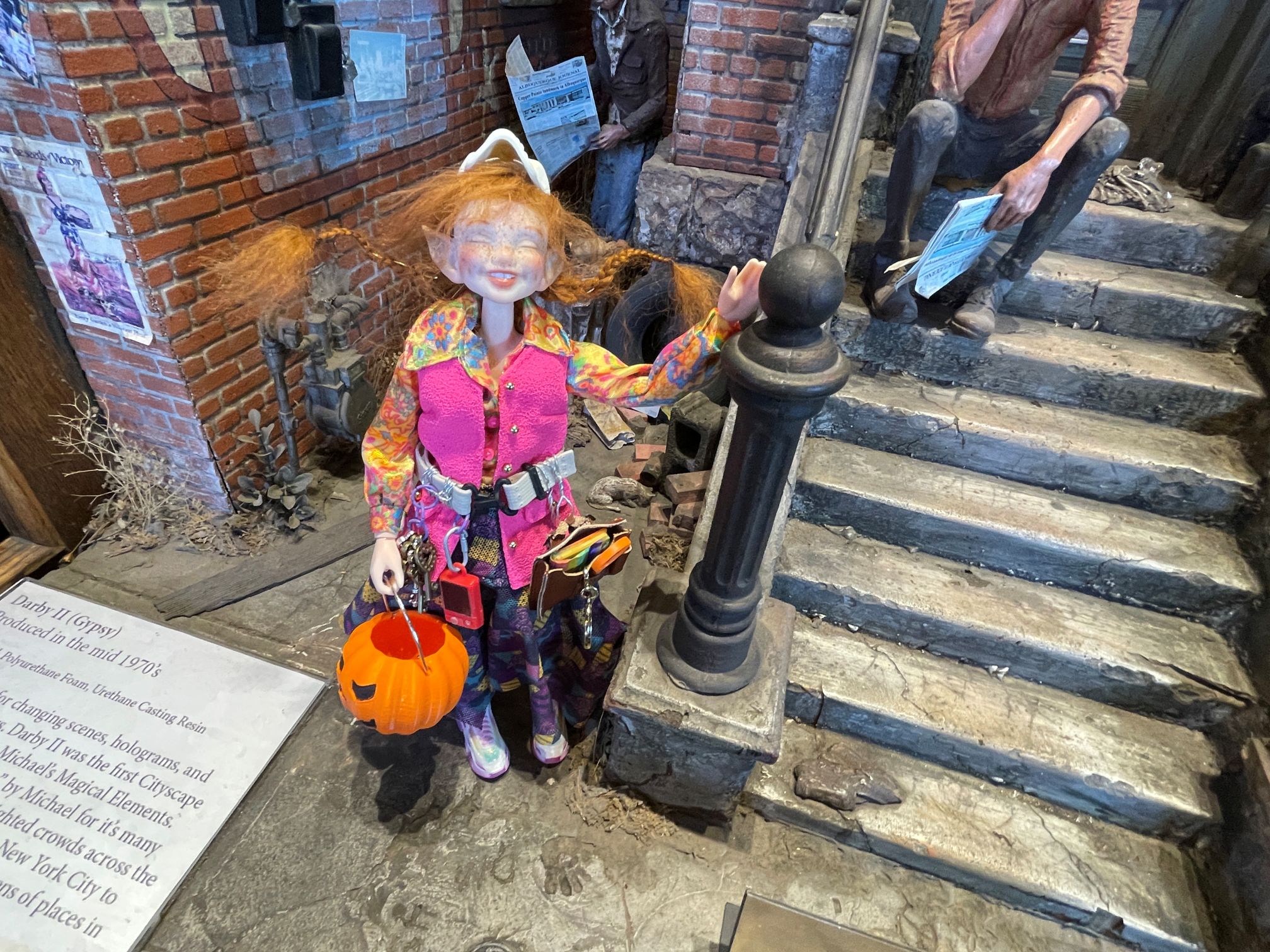
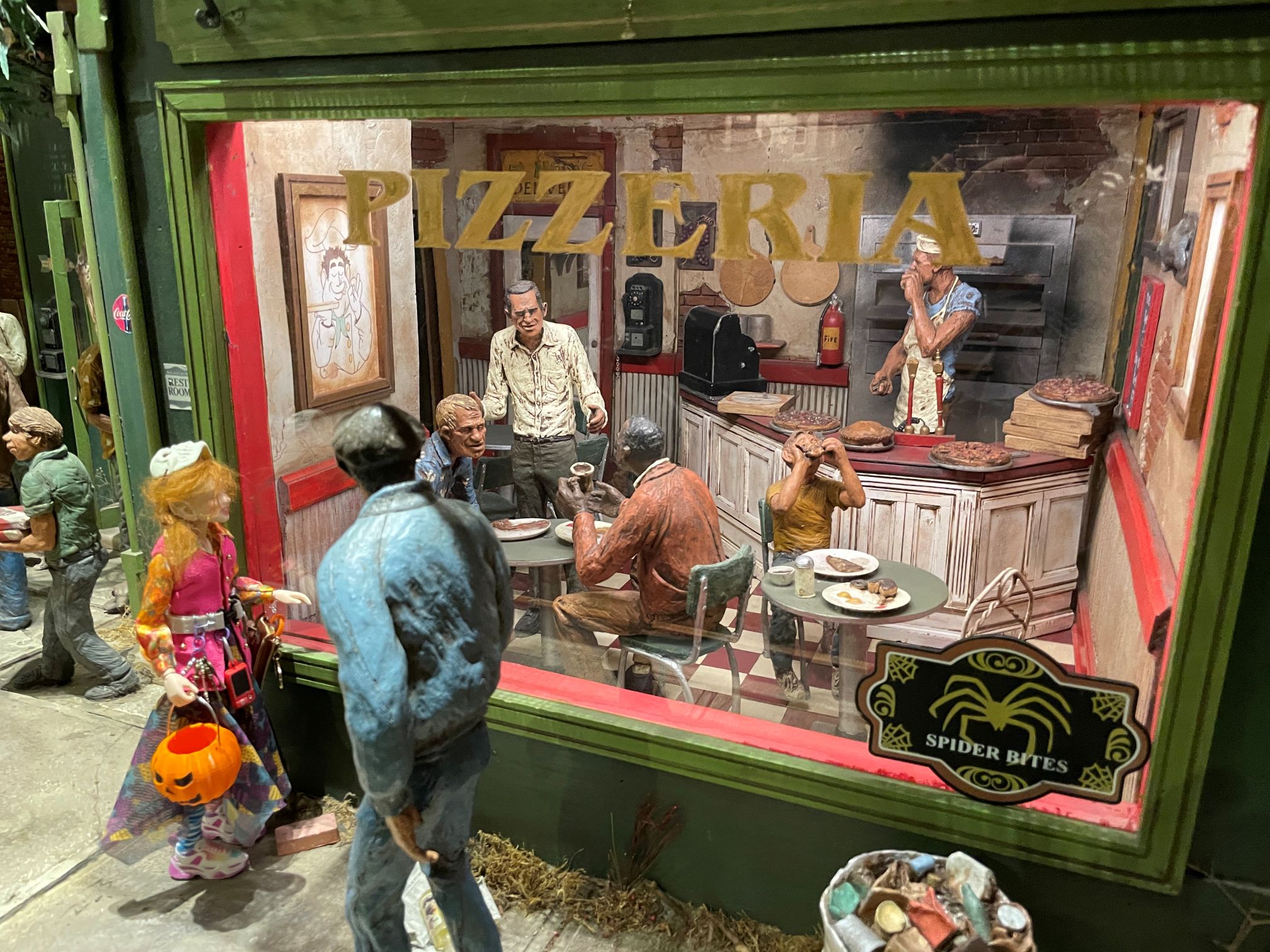
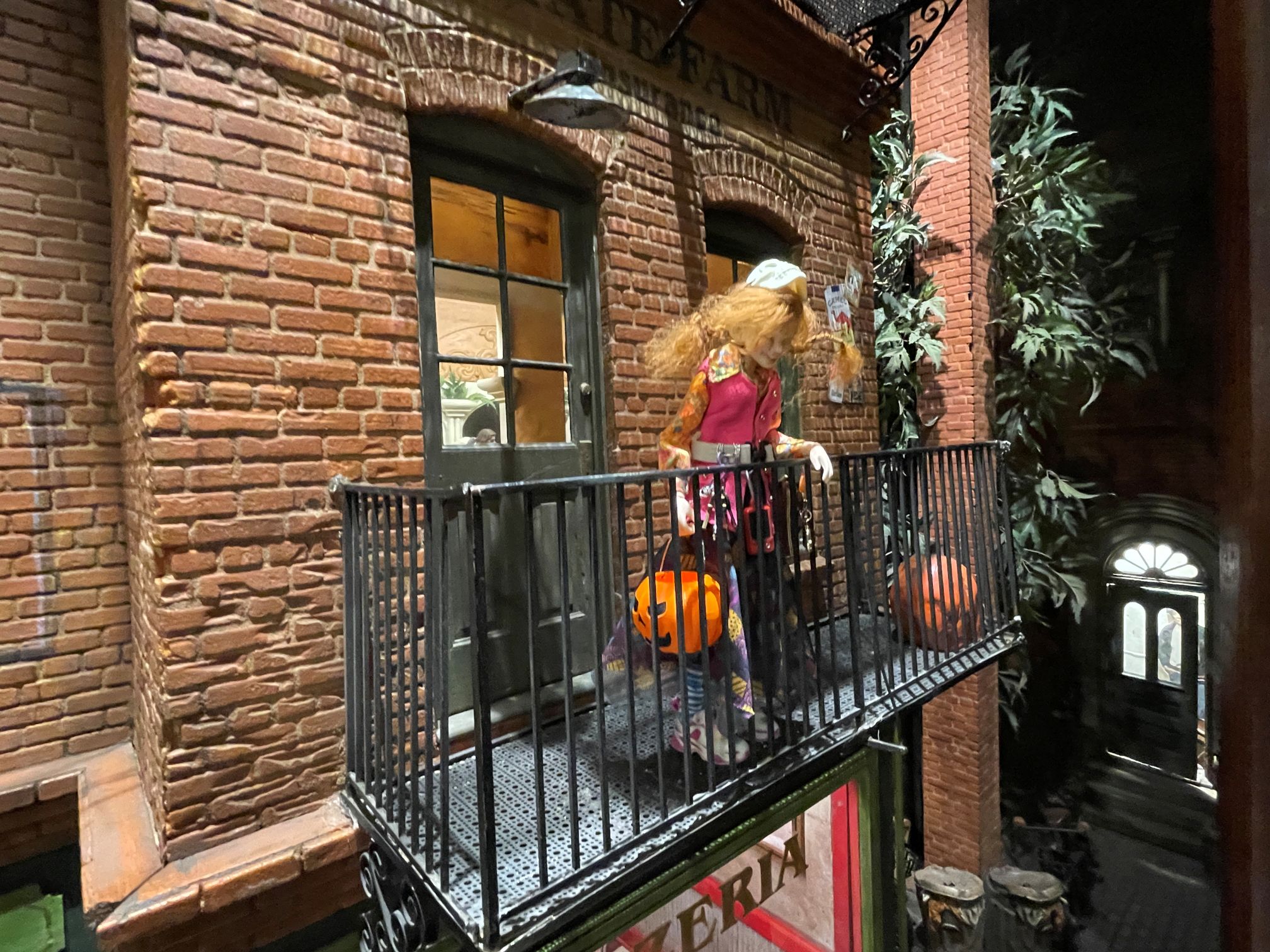
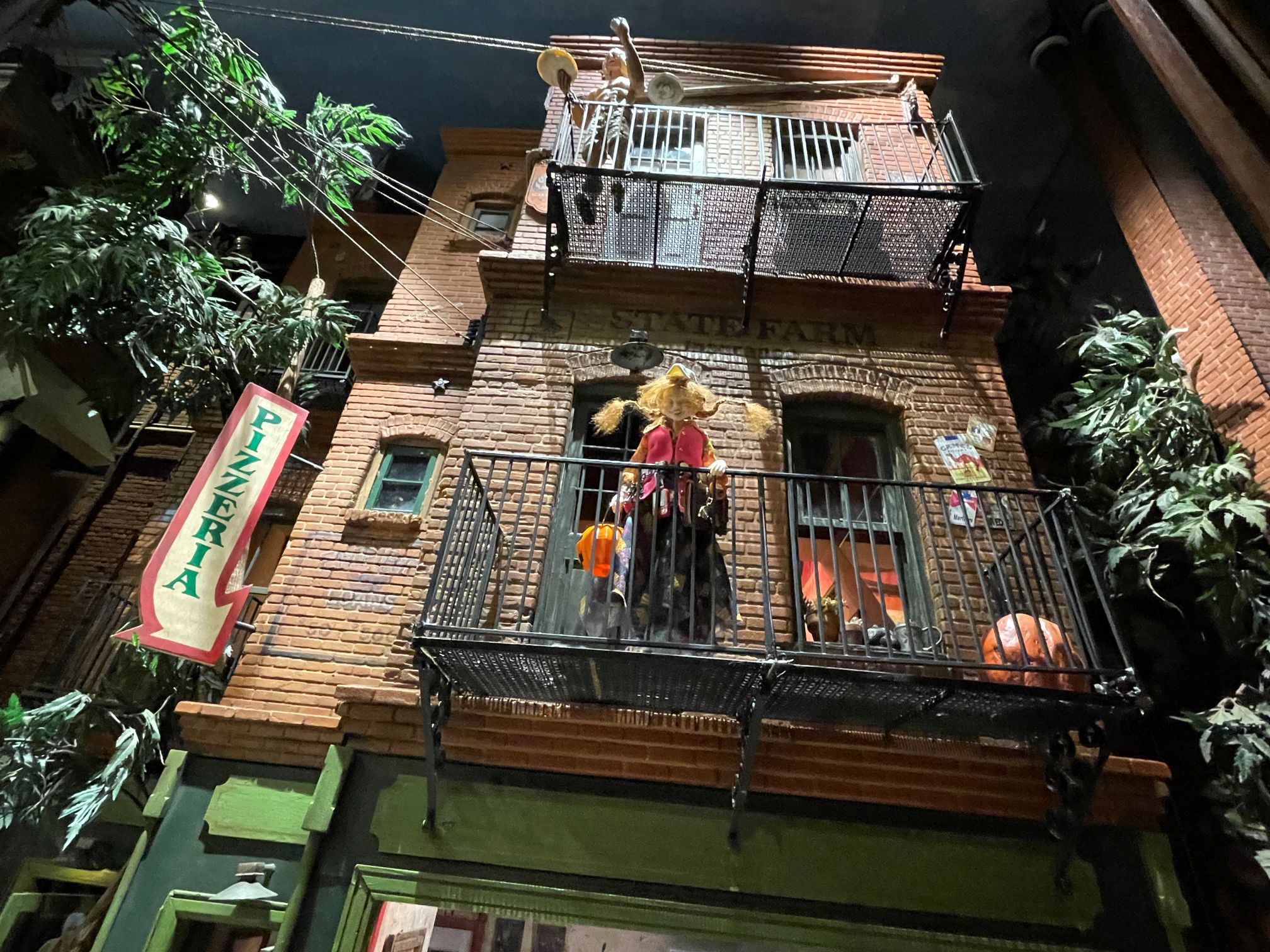
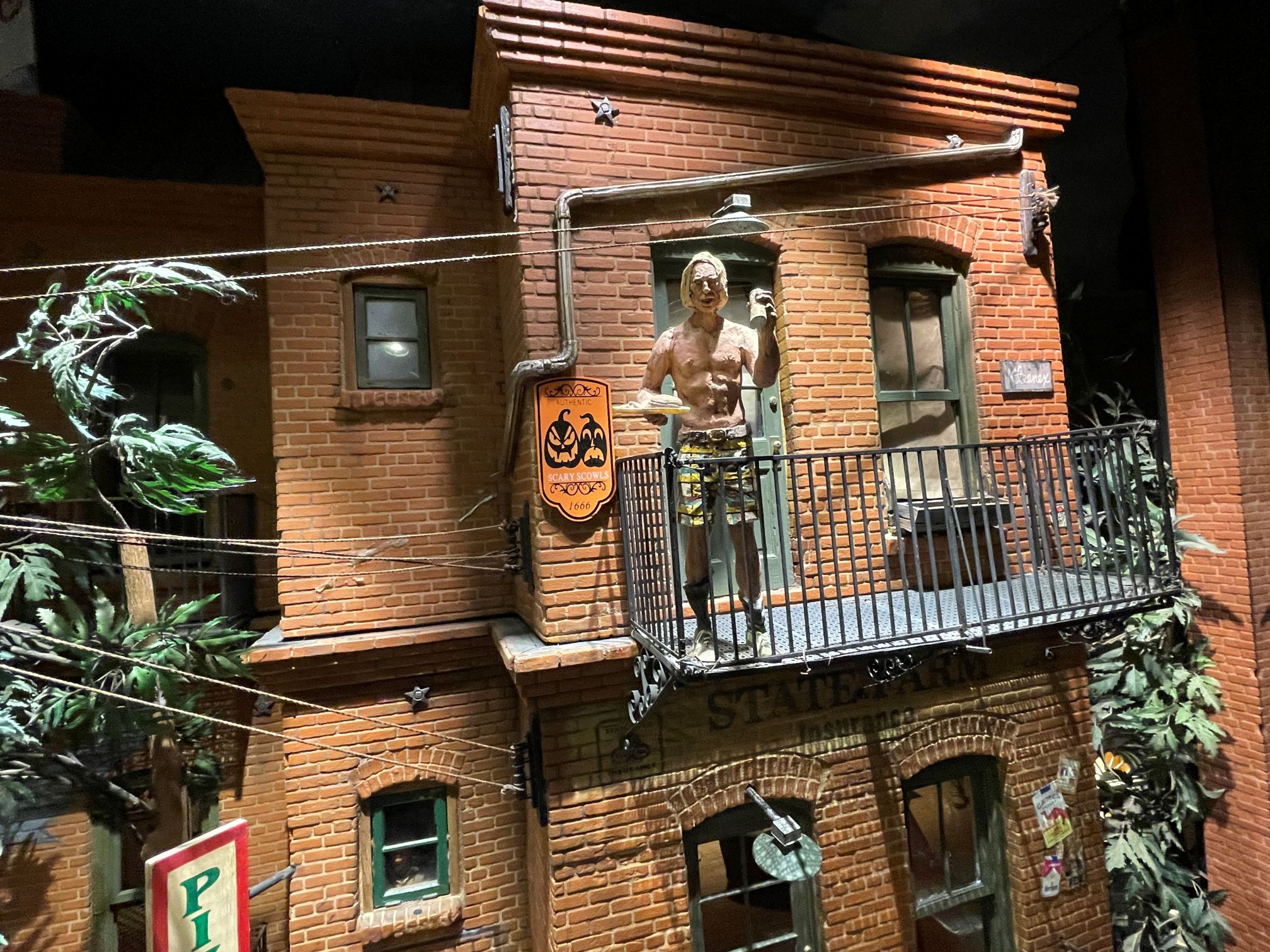
Pippi outside the gallery. She is dressed up for Halloween because she heard that Magic Town was decorated for the holiday. The additions of occasional skeletons and witch hats didn’t really provide a sense of Halloween, though.
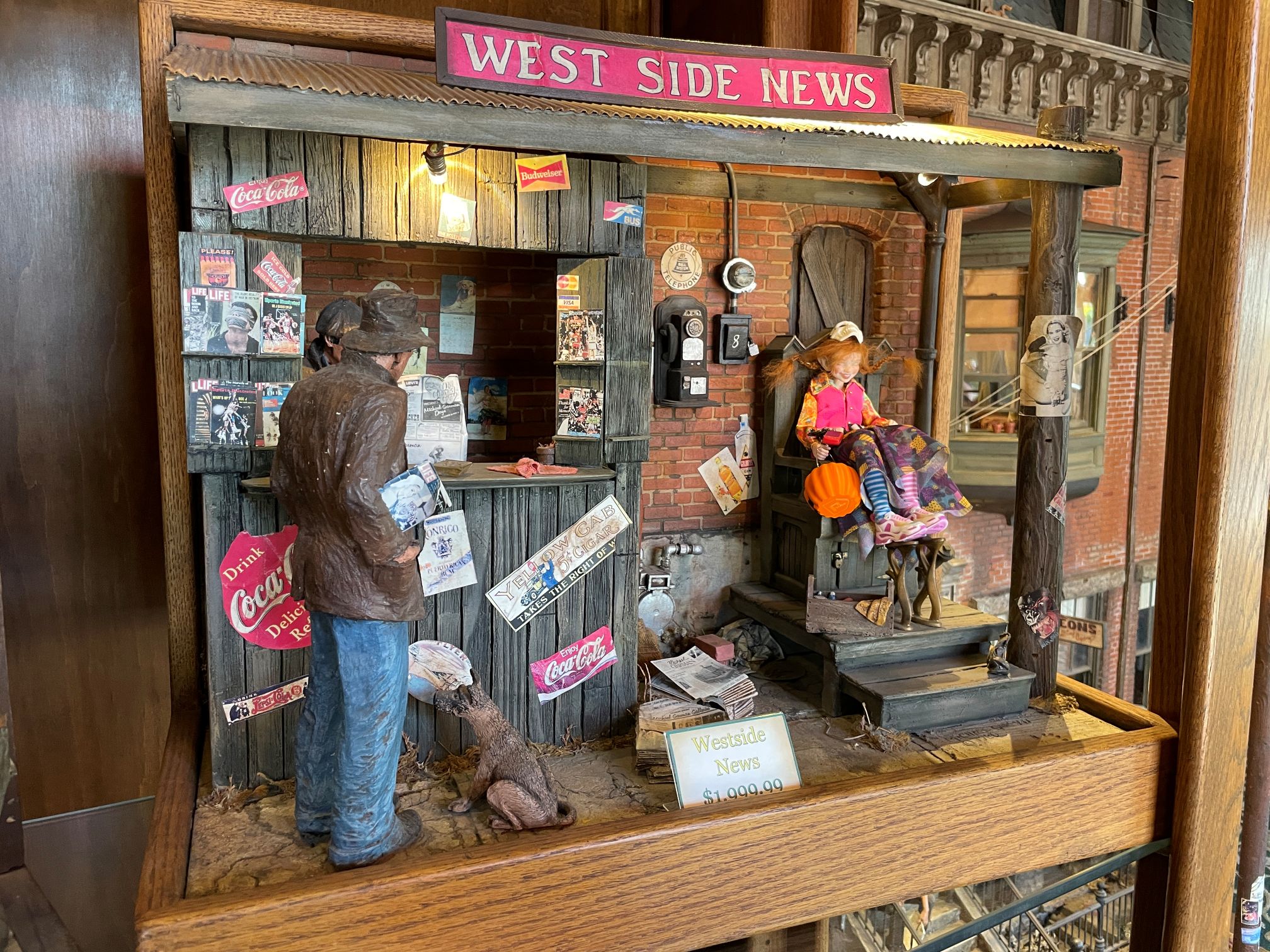
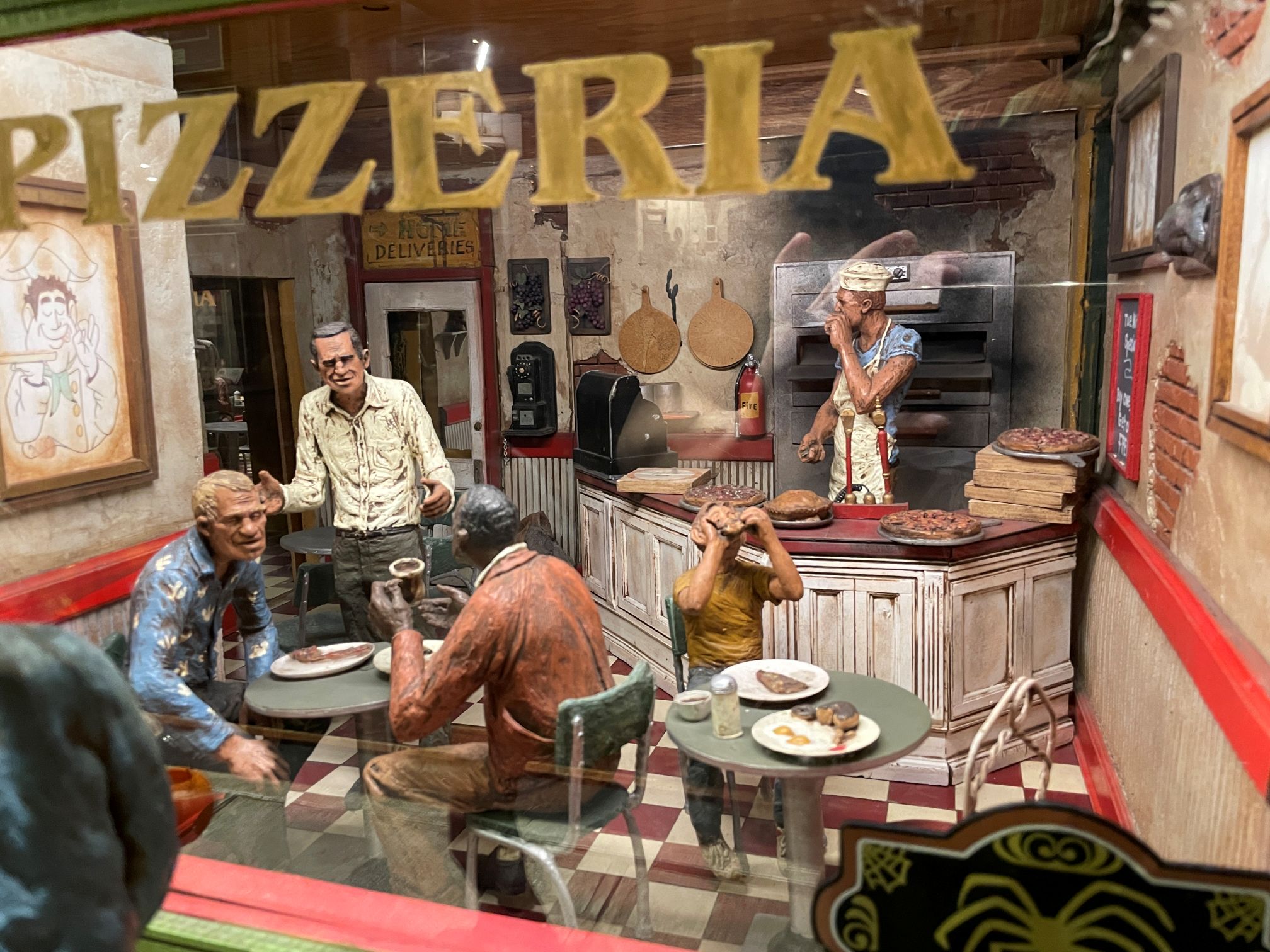
Pippi in Westside News, a set available in the gift shop for $1,999.99 [tax not included]. Like lots of people working in small scales, Garman loved to add small details, particularly posters, papers, and other ephemera, to increase the realism of his scenes.
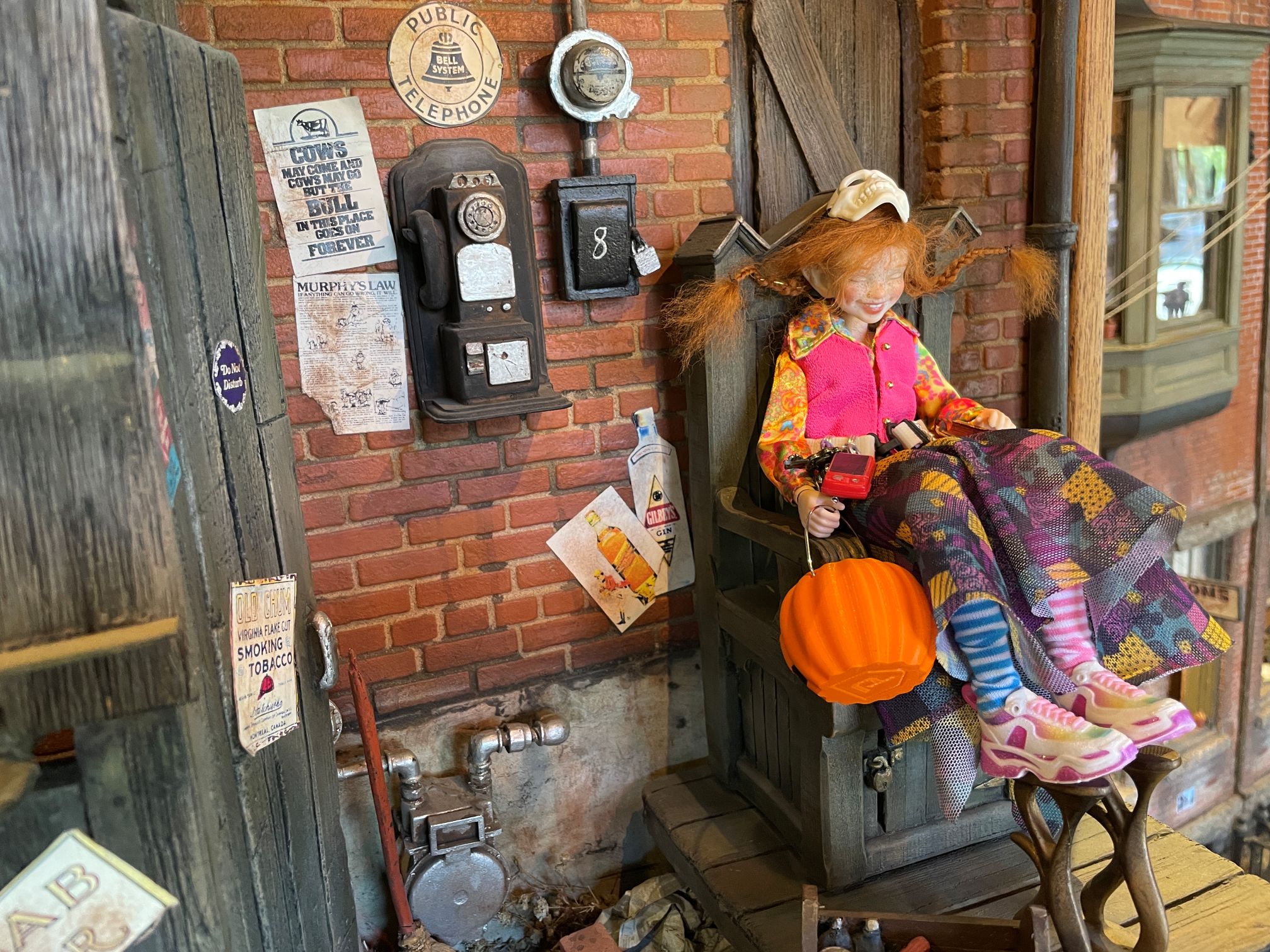
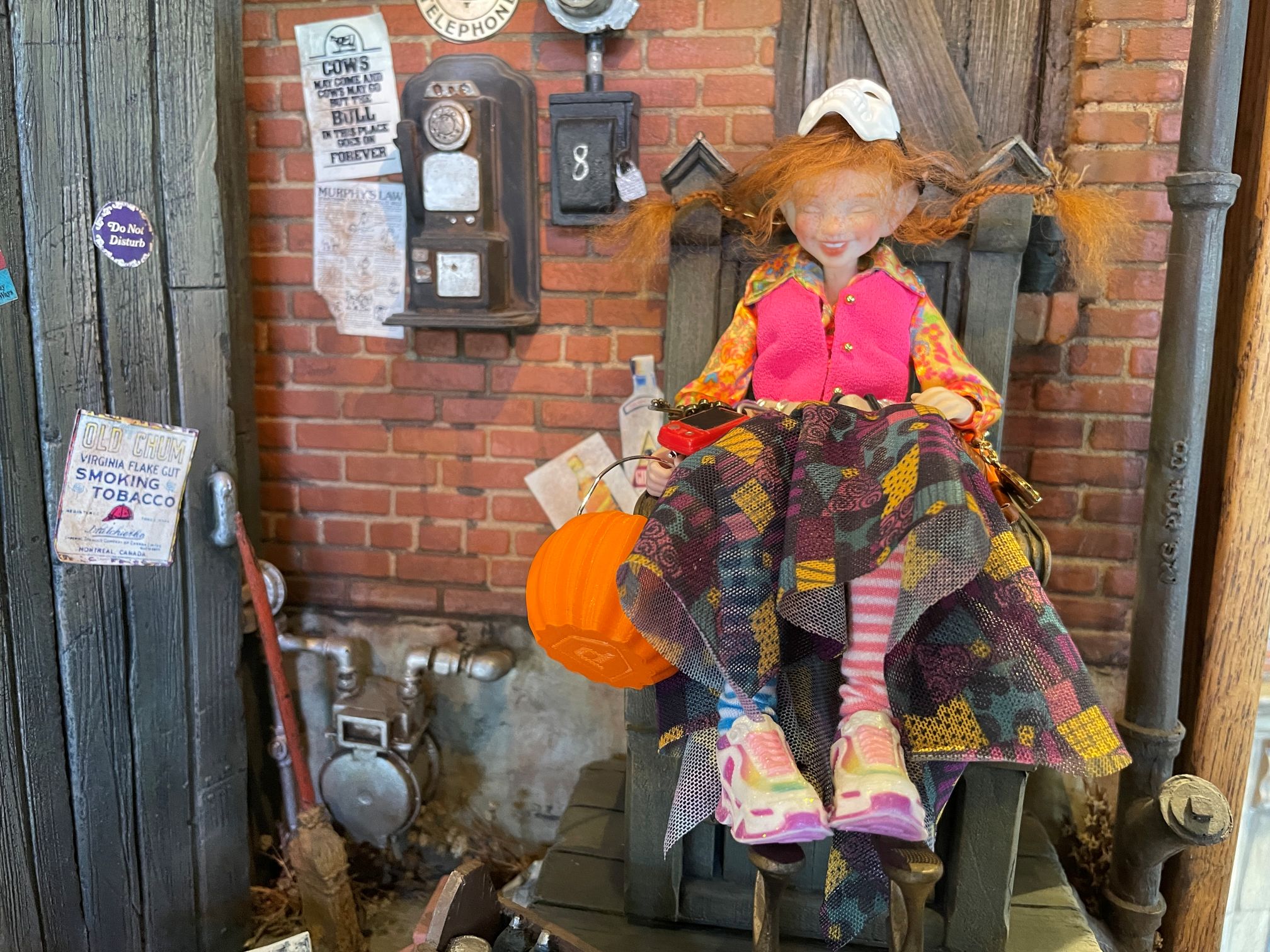
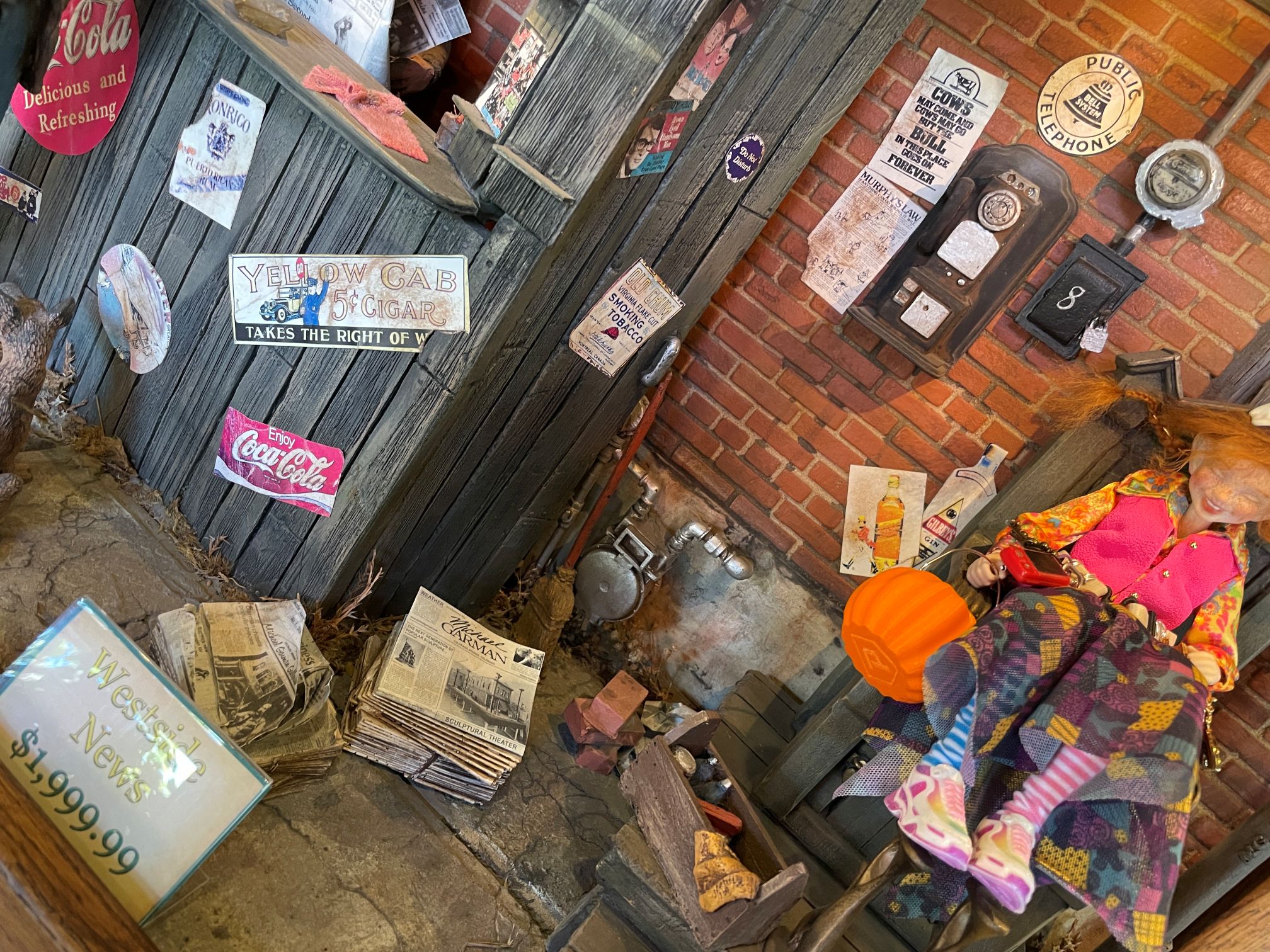
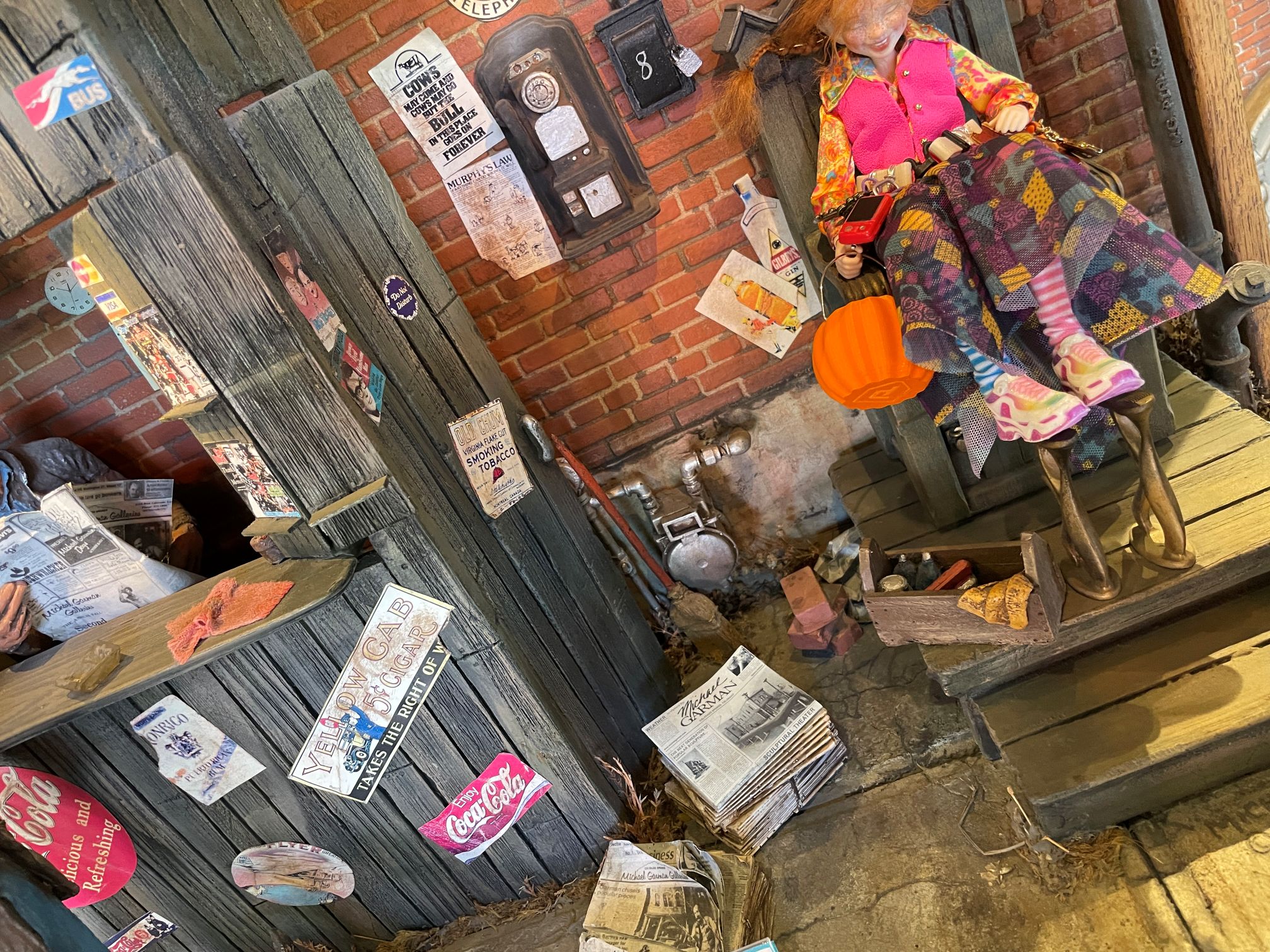
Pippi in “Darby II,” a set of Garman’s that traveled around the U.S. for various displays. It has options to change scenes, use mirrors to give the illusion of greater size, and add projected video that the label called “holograms.” This set illustrates Garman’s penchant for sculpting trash piles. Pippi thinks they stink. :p

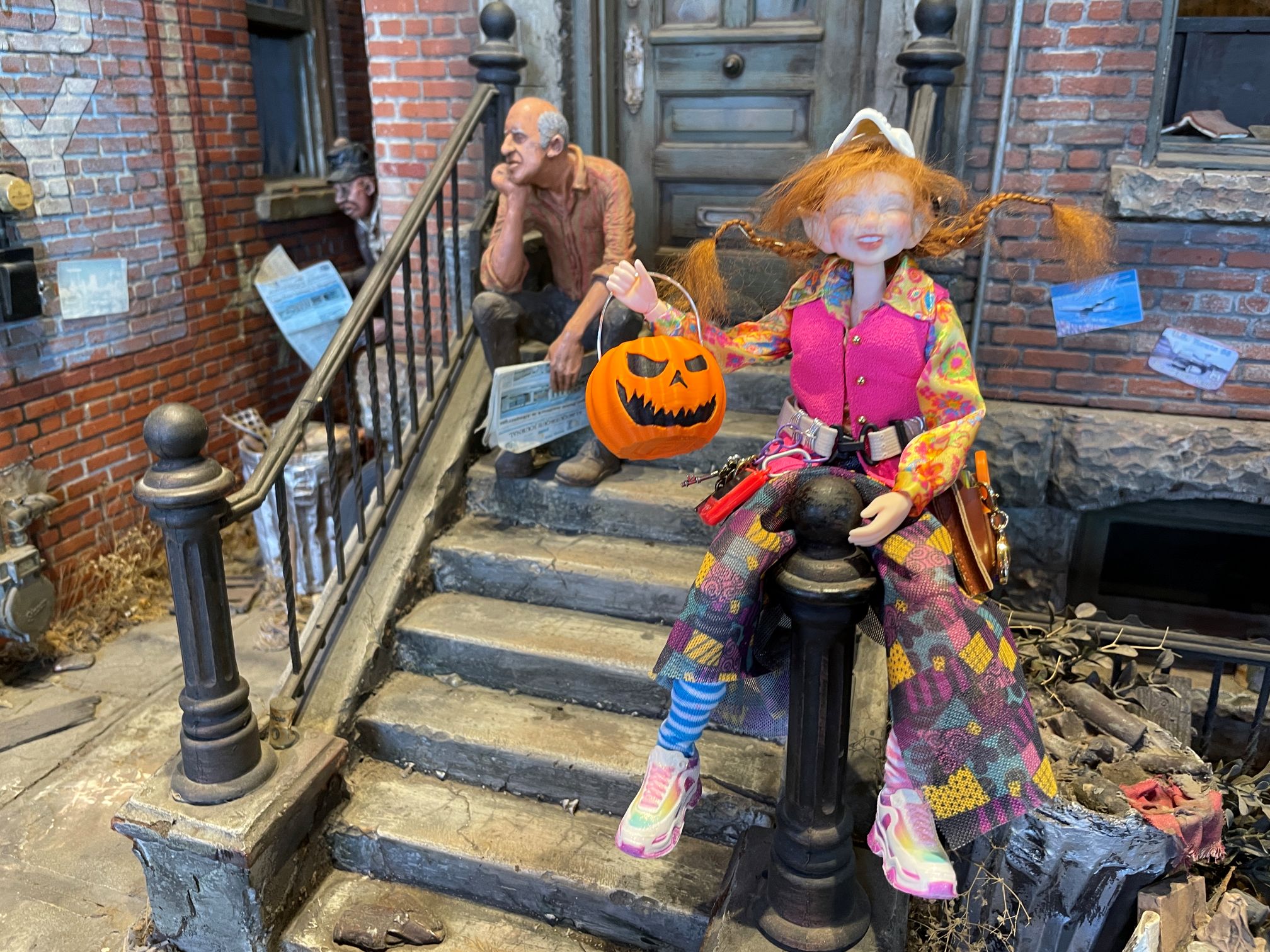
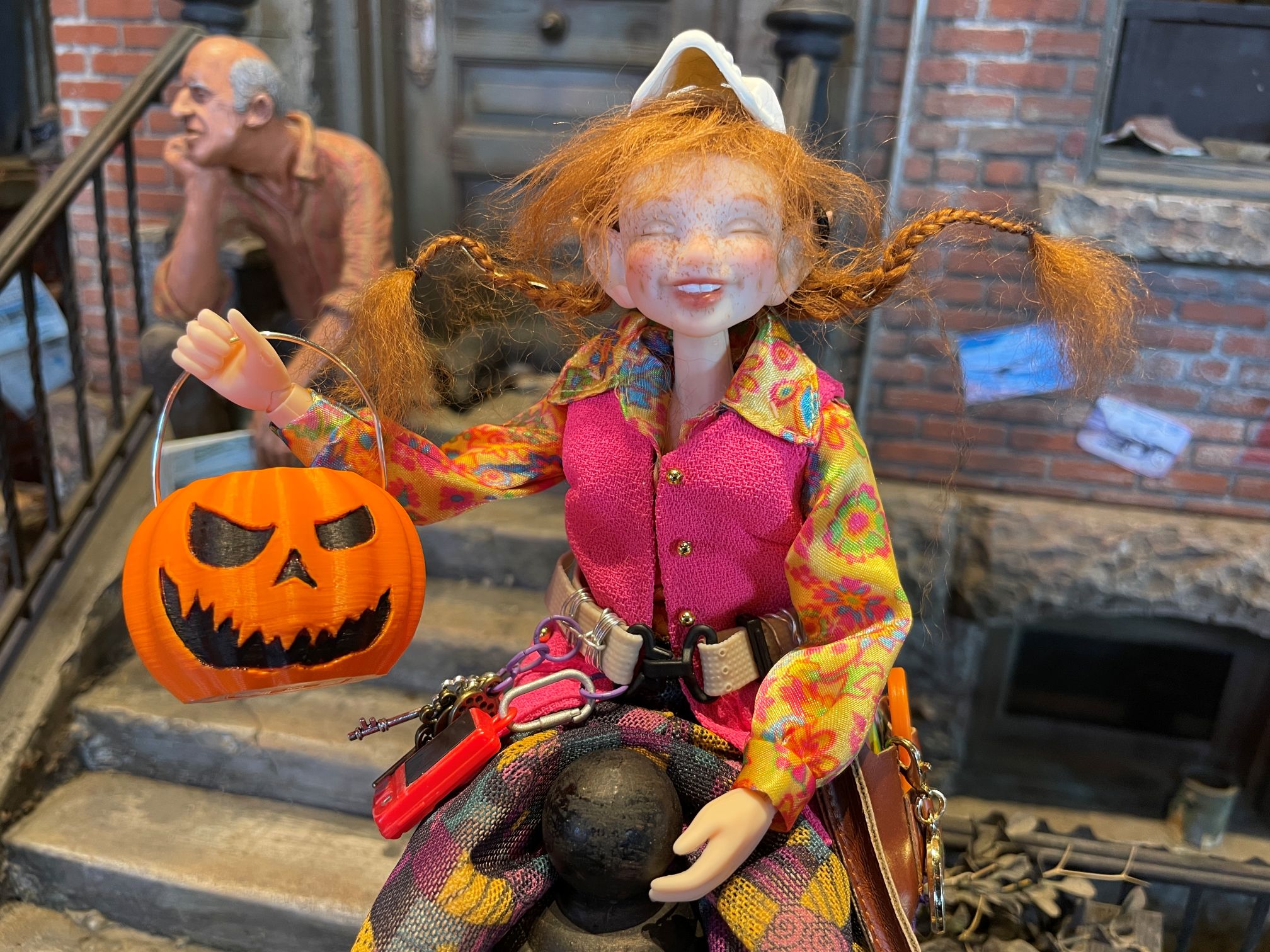
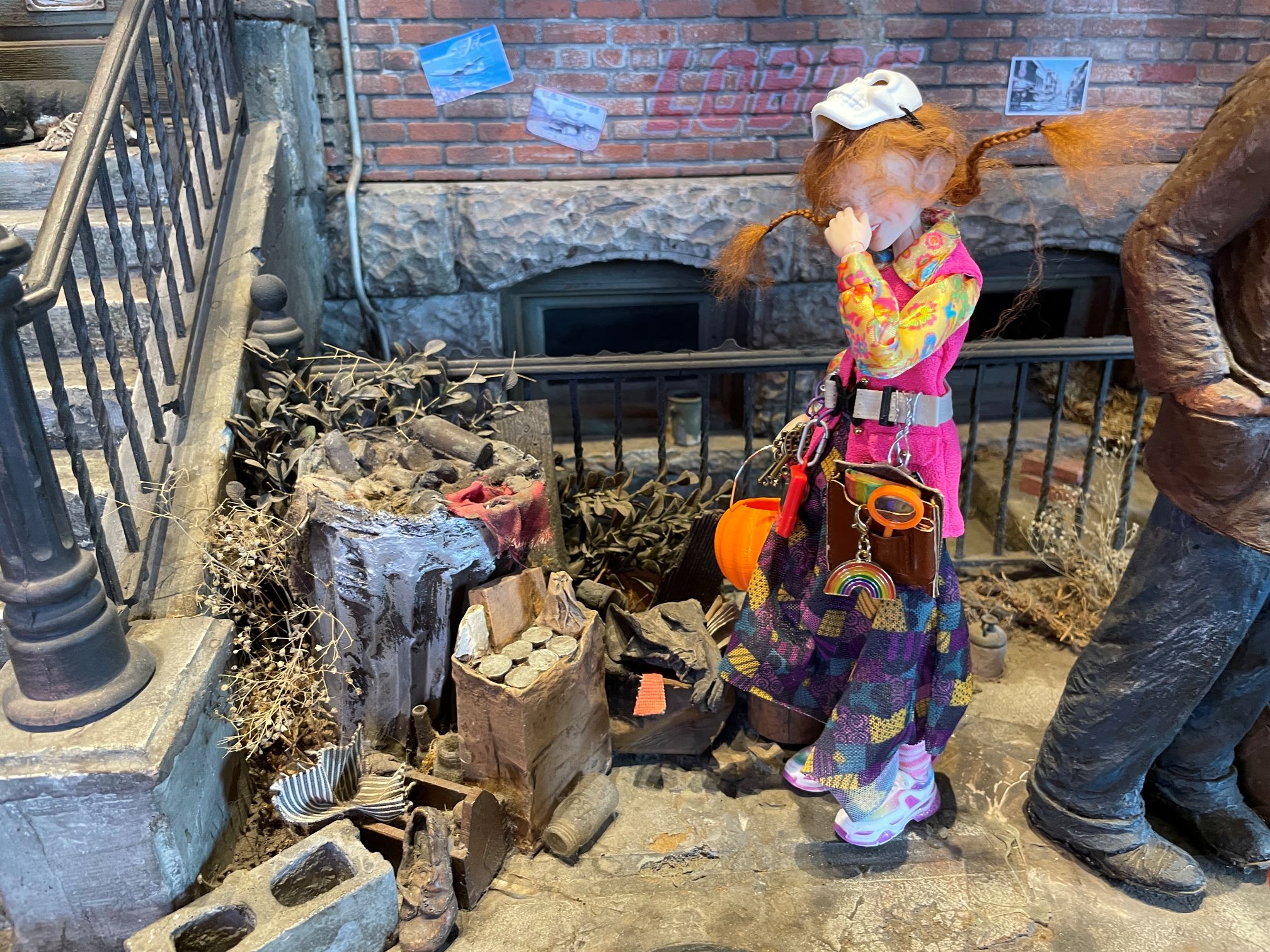
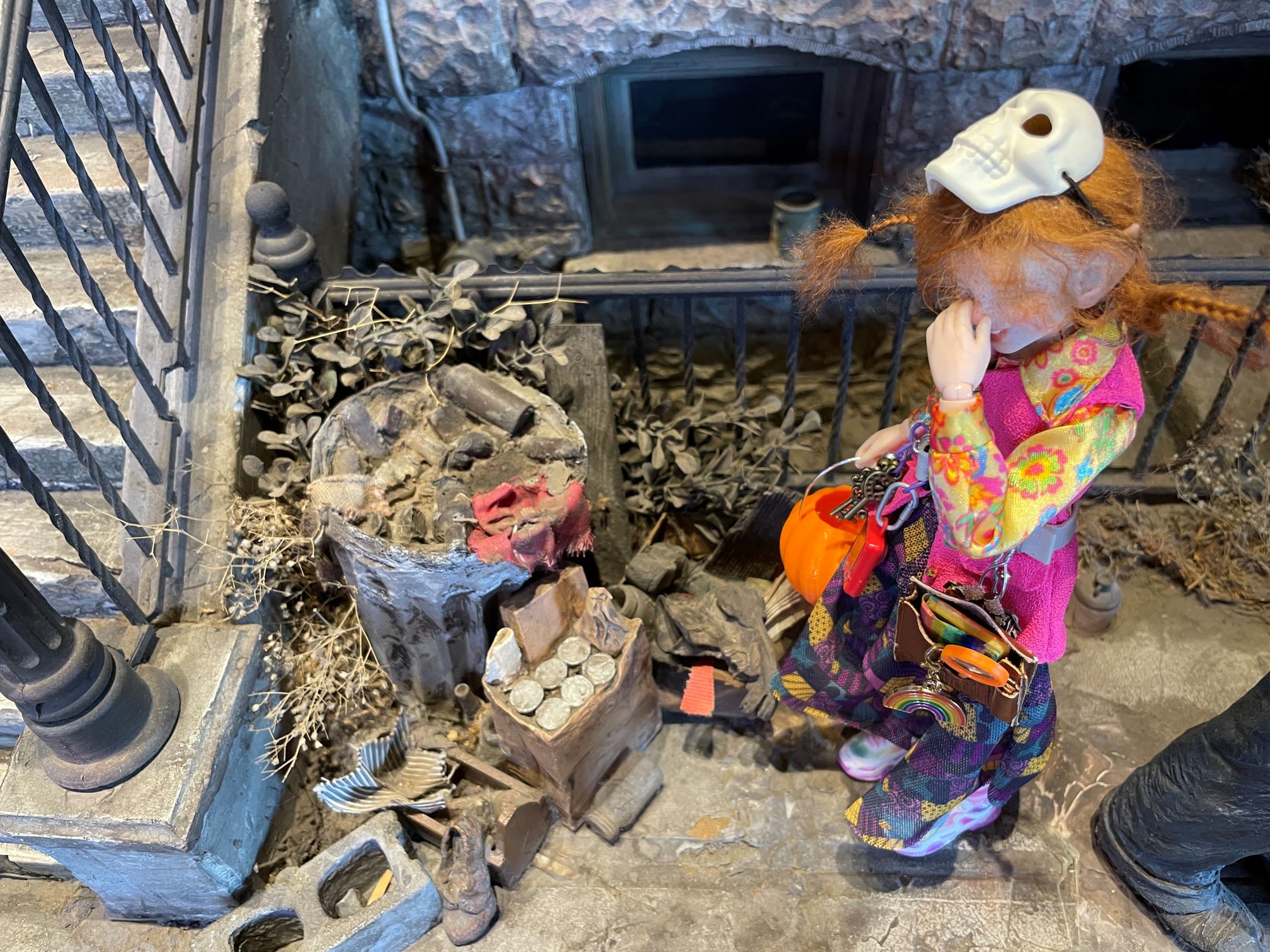
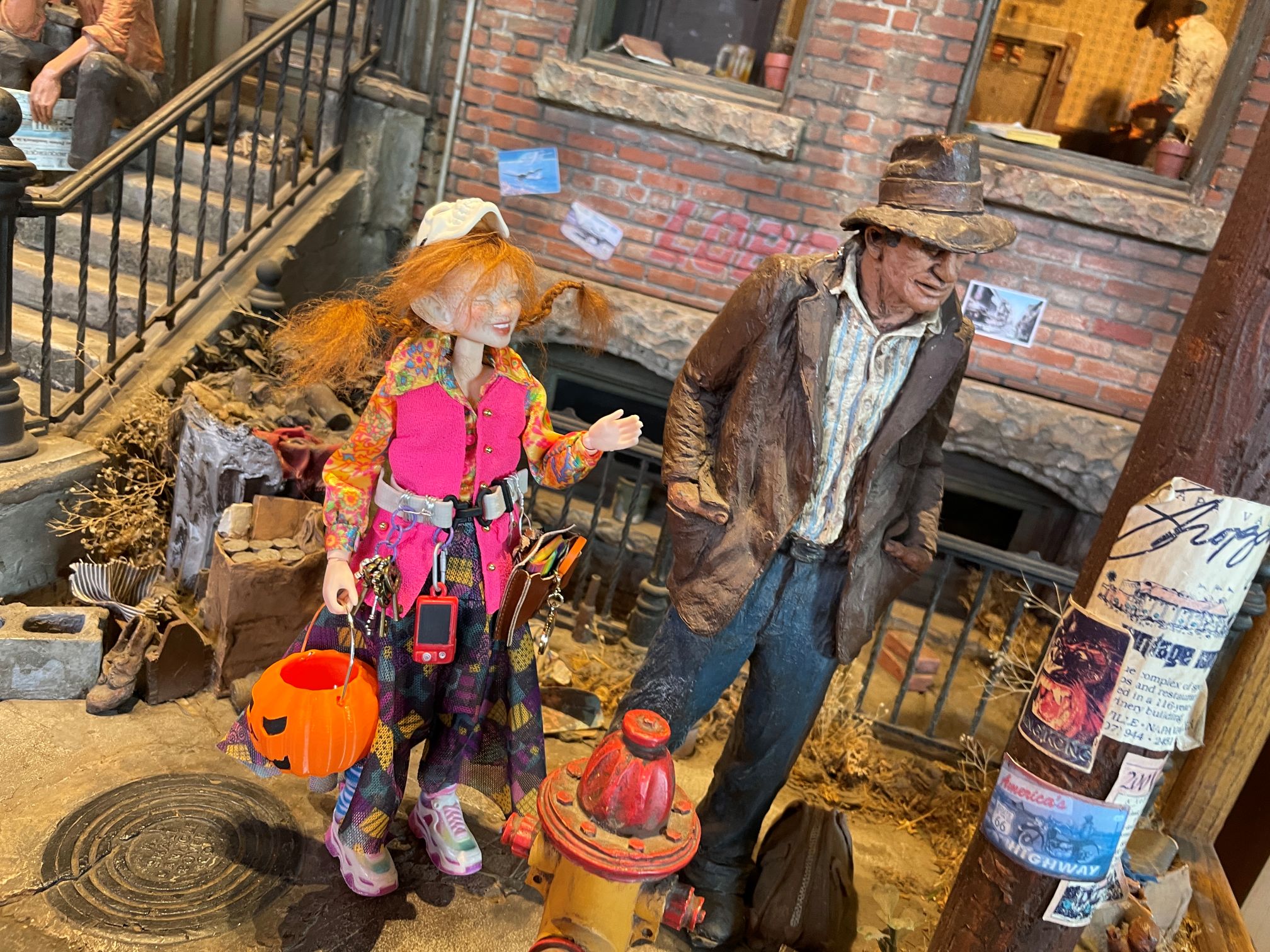
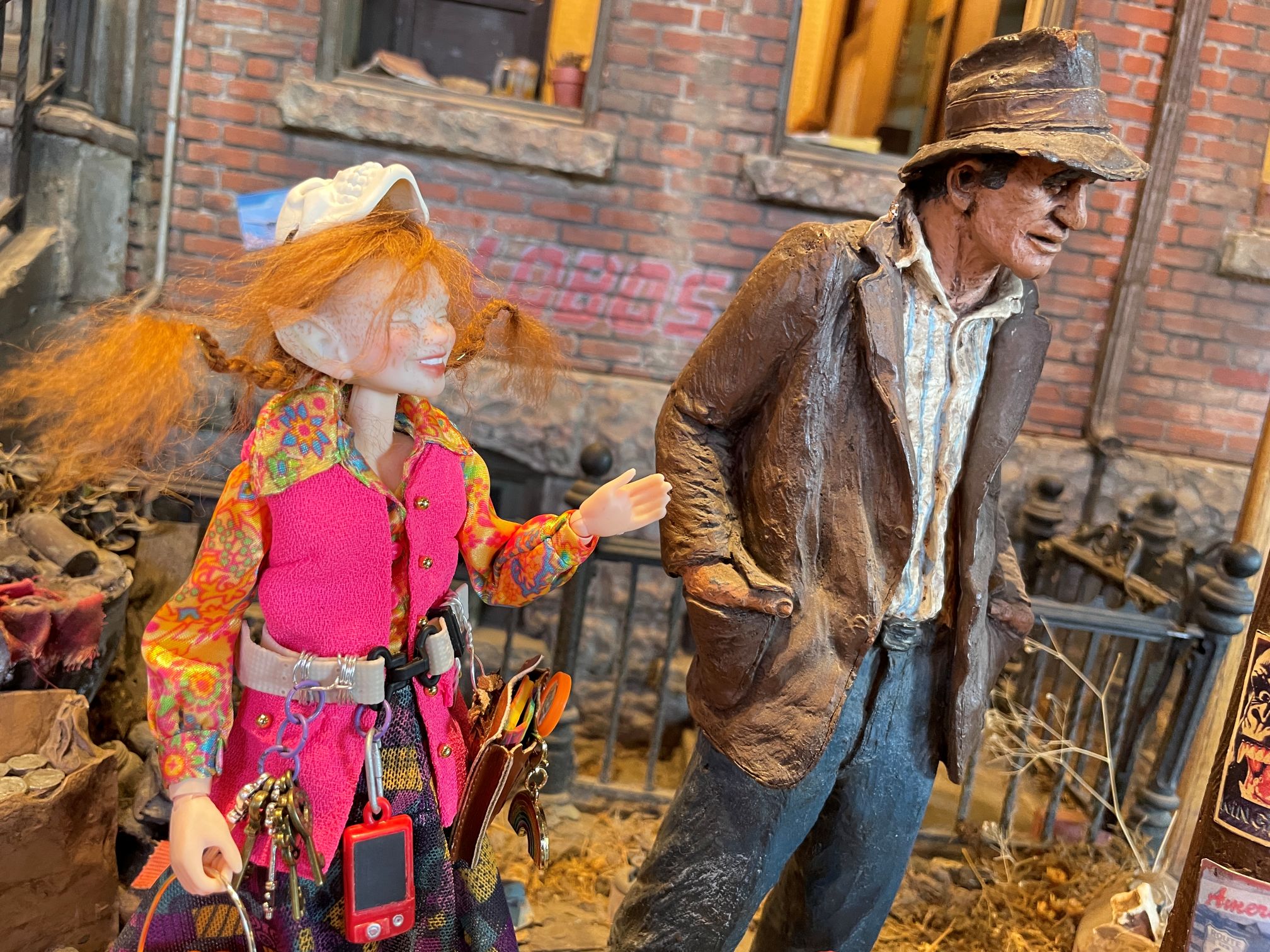
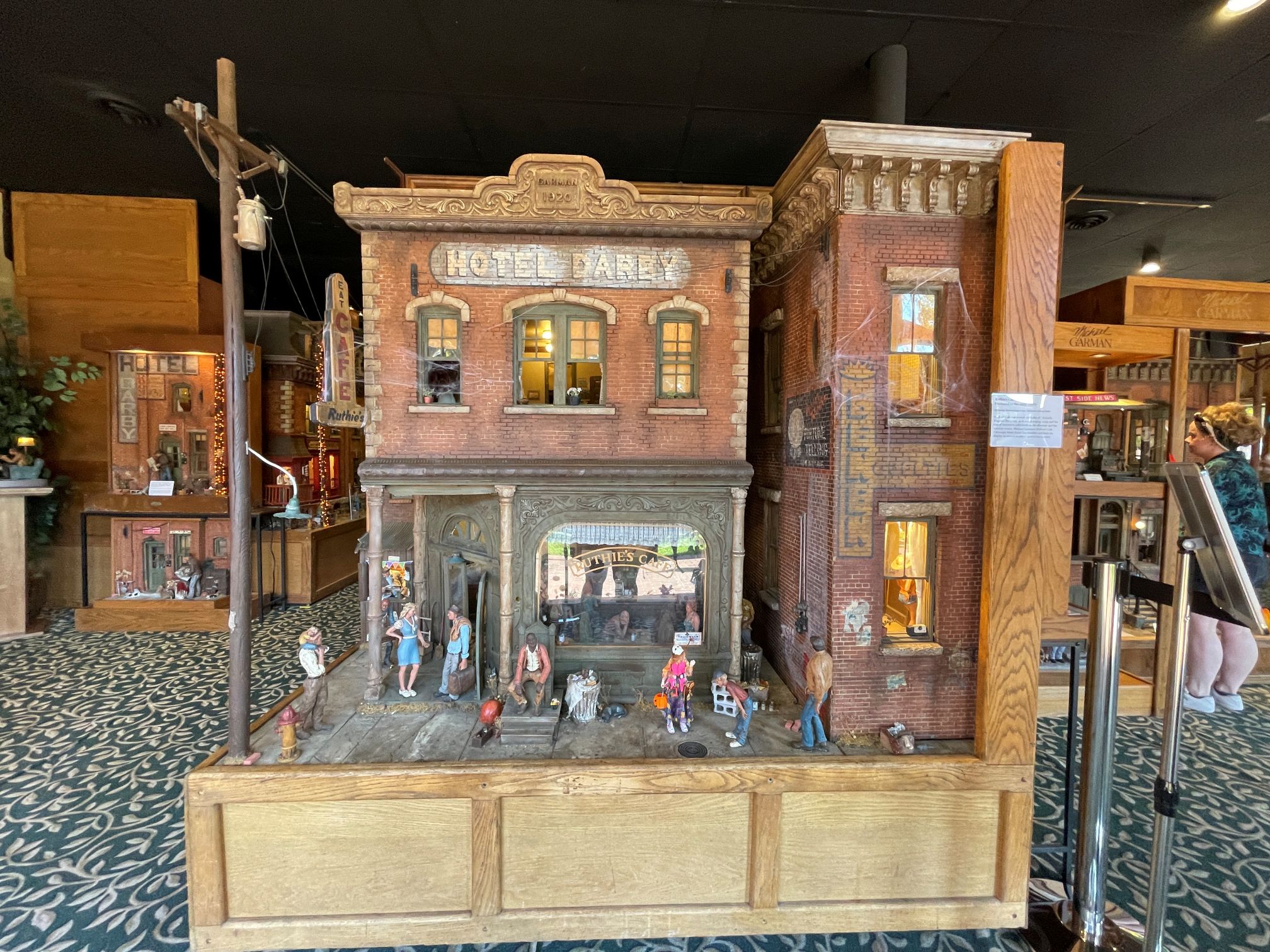
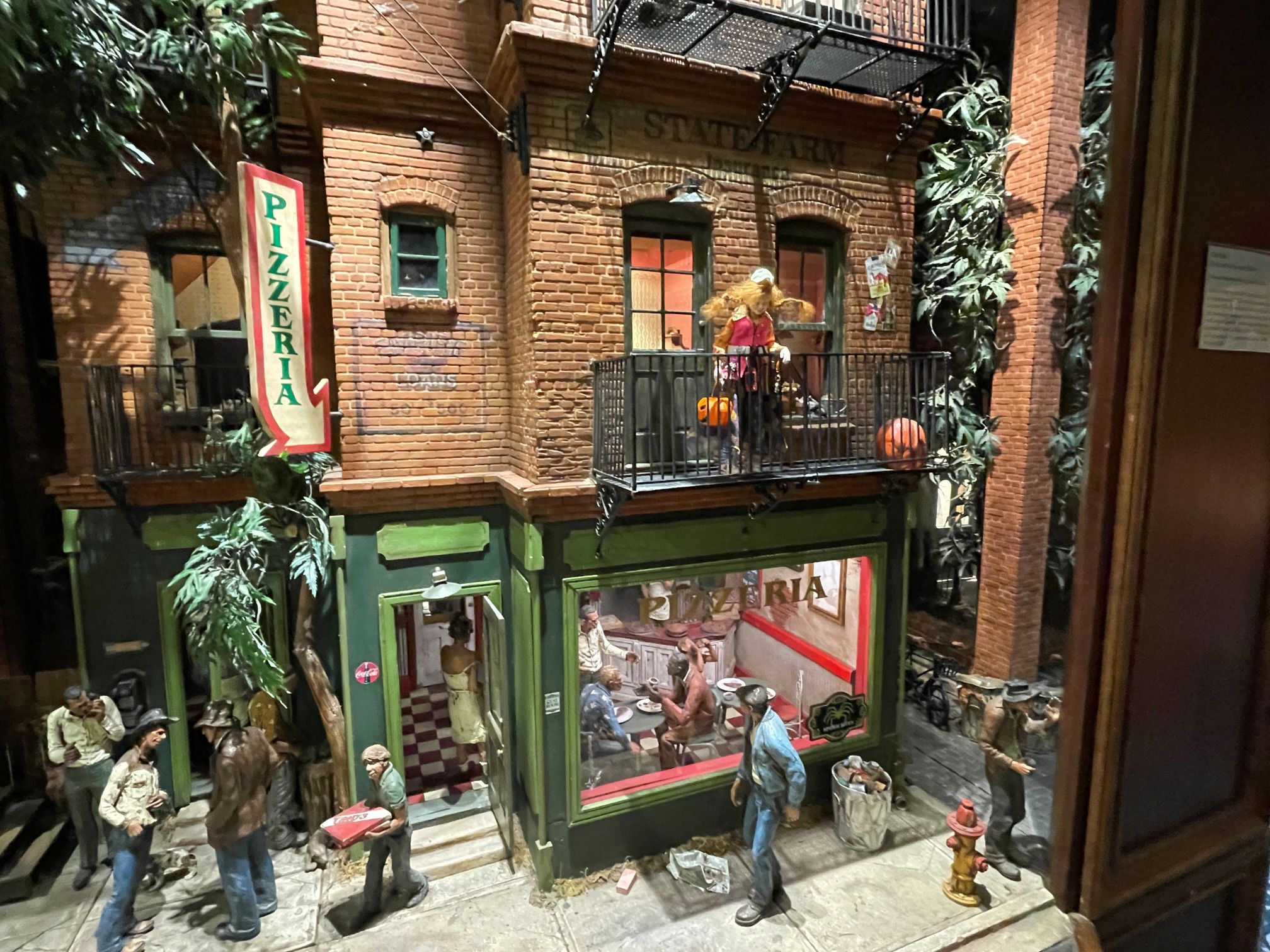
Pippi around Ruthie’s Cafe. Note guy carrying boxes to left of exterior door of cafe.
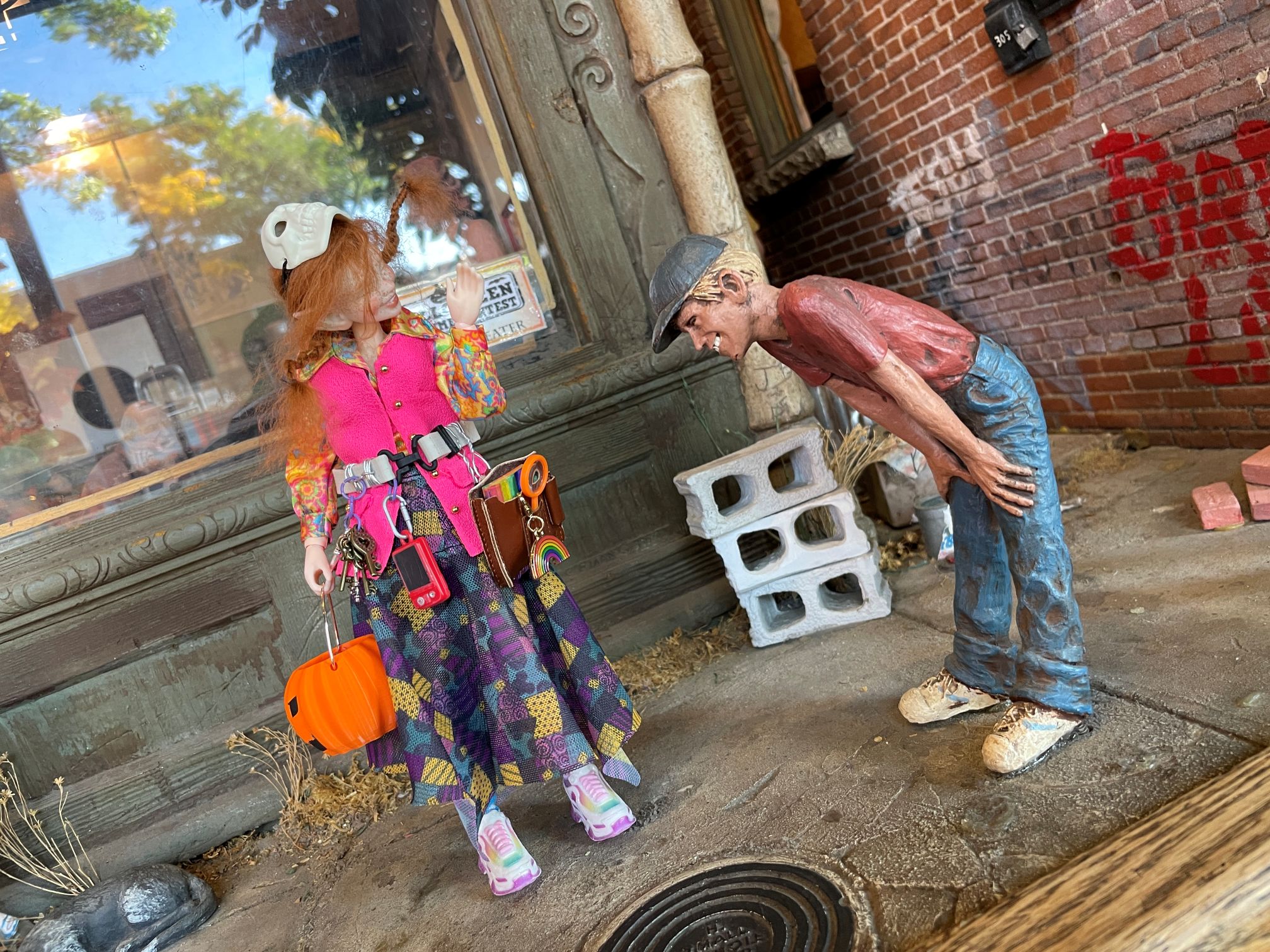

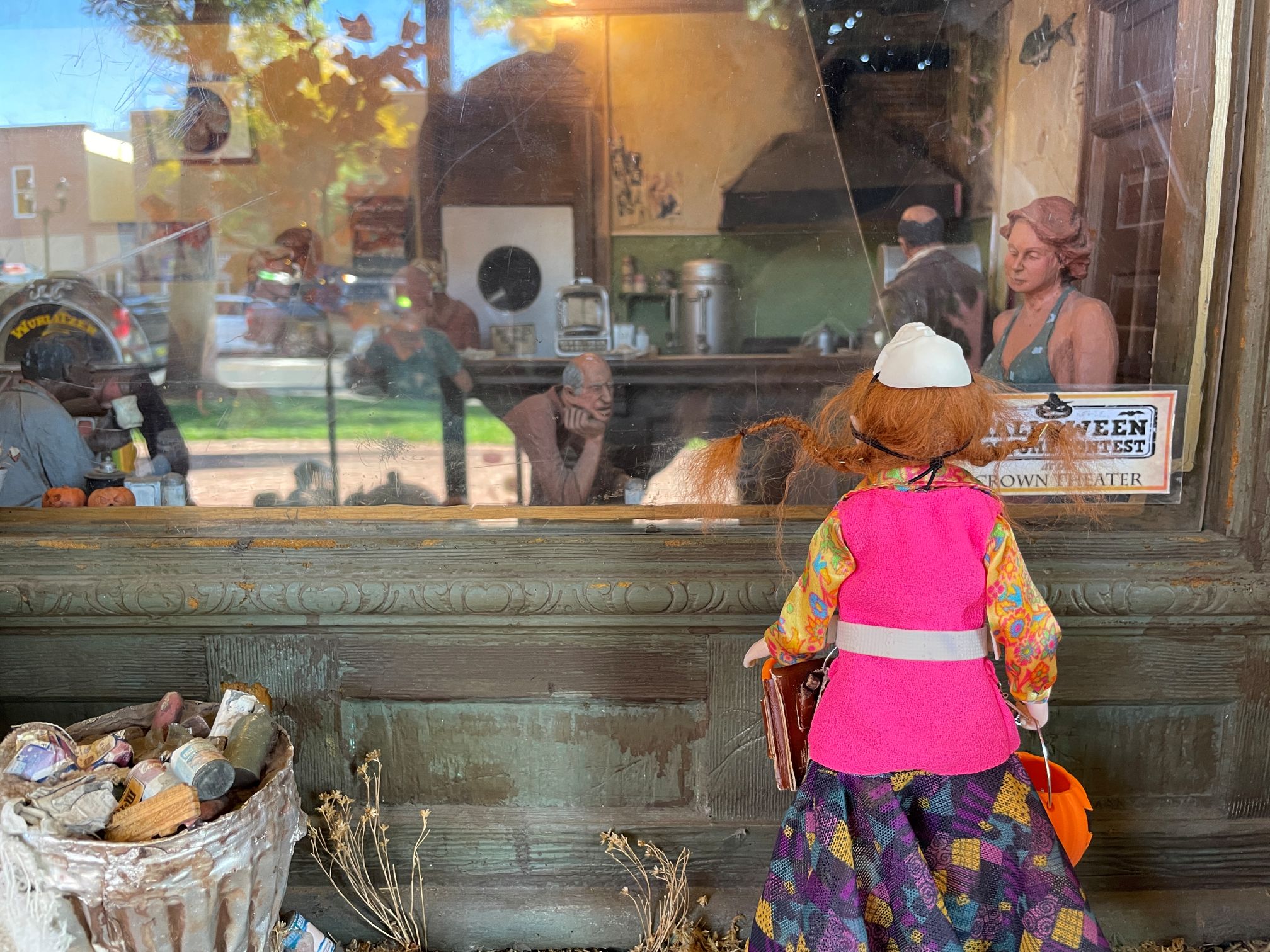
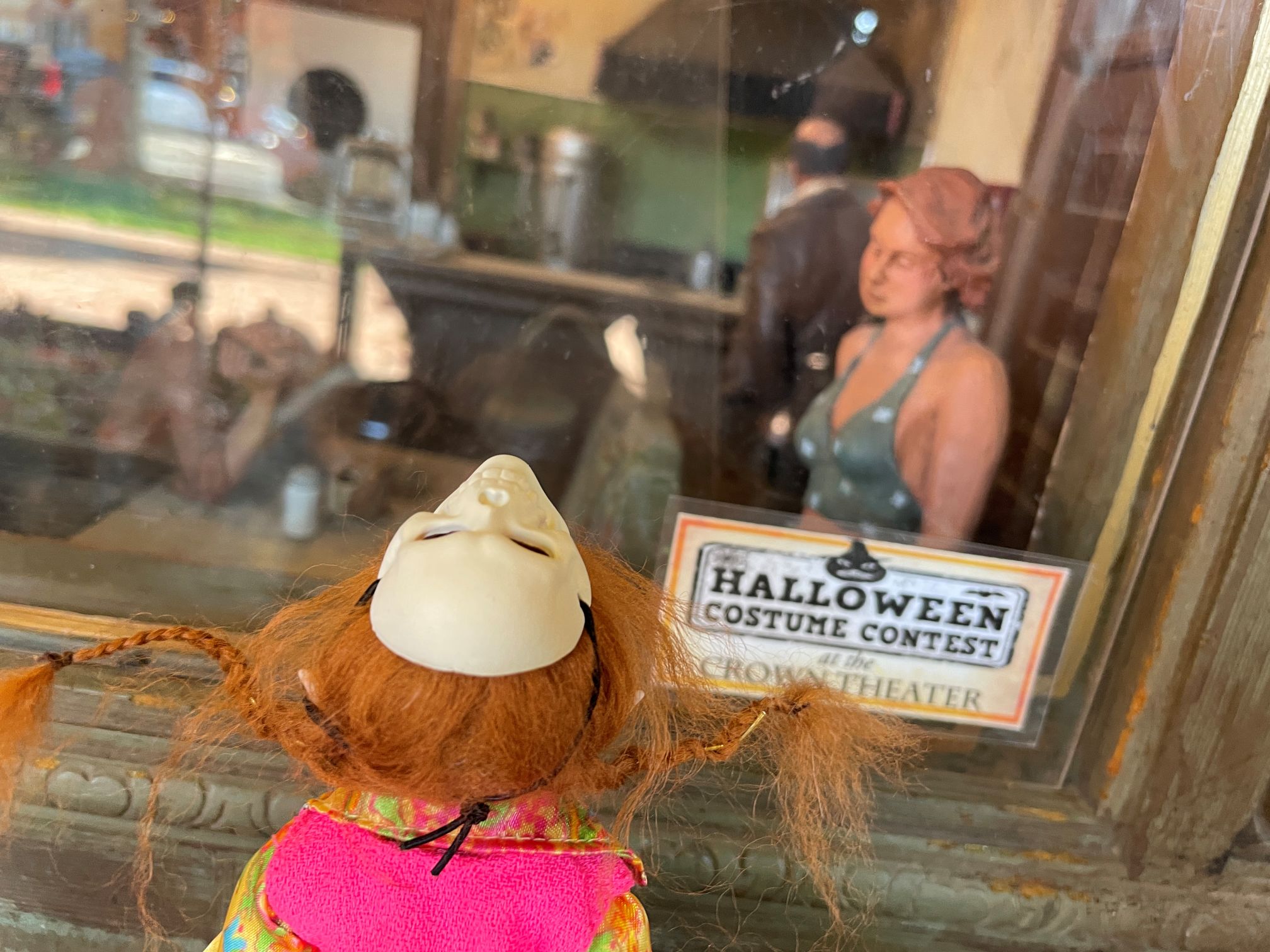
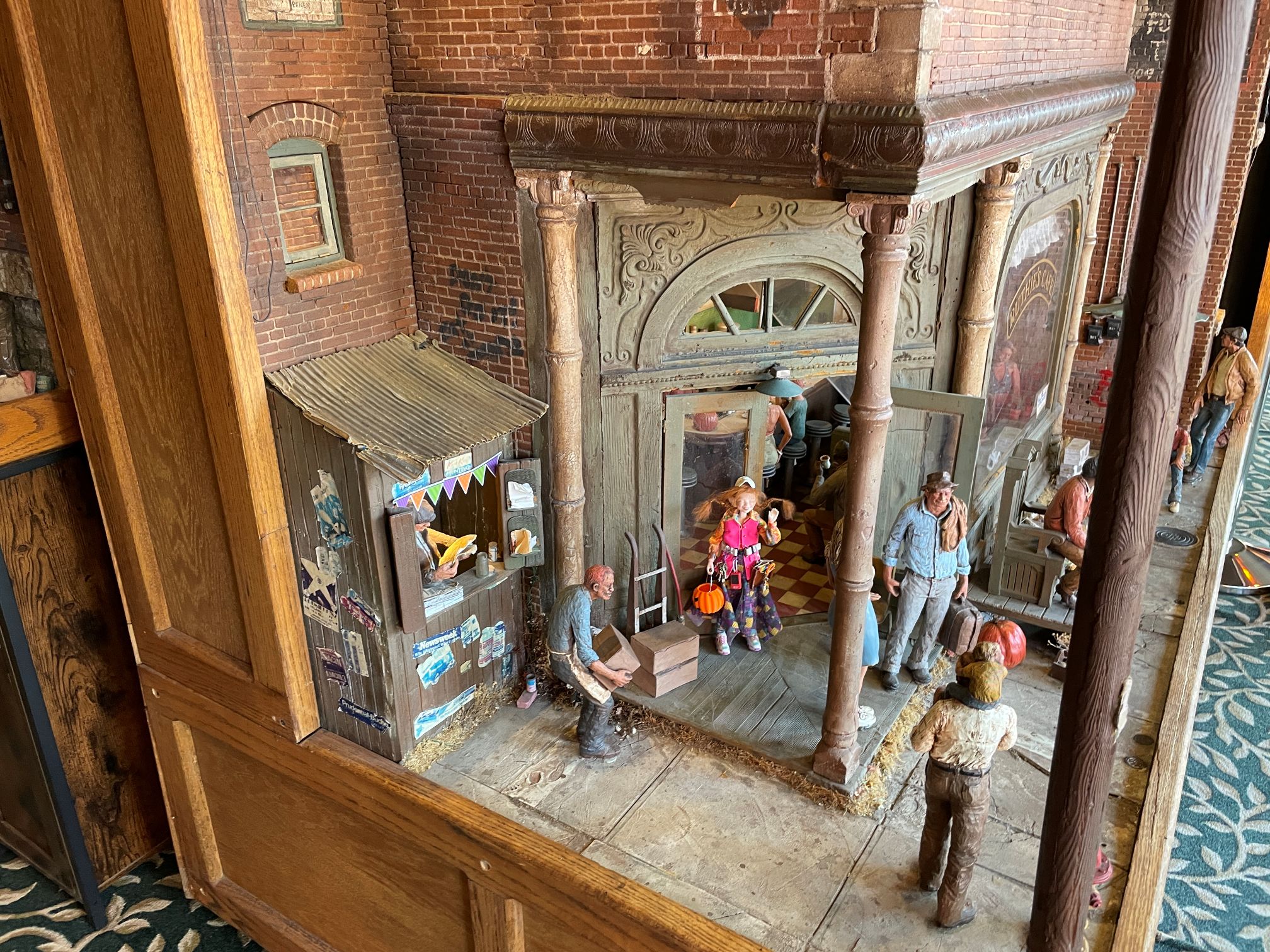
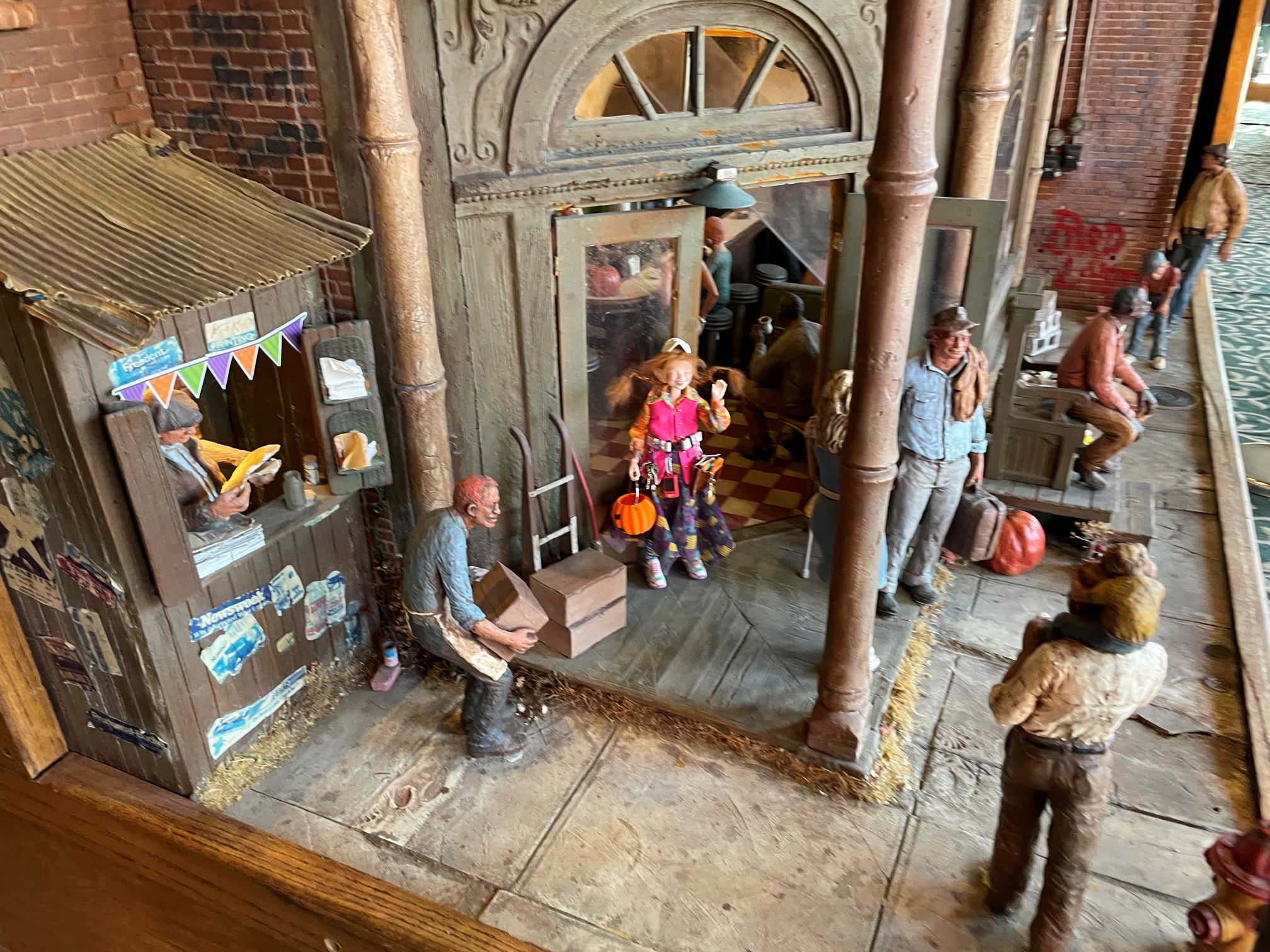
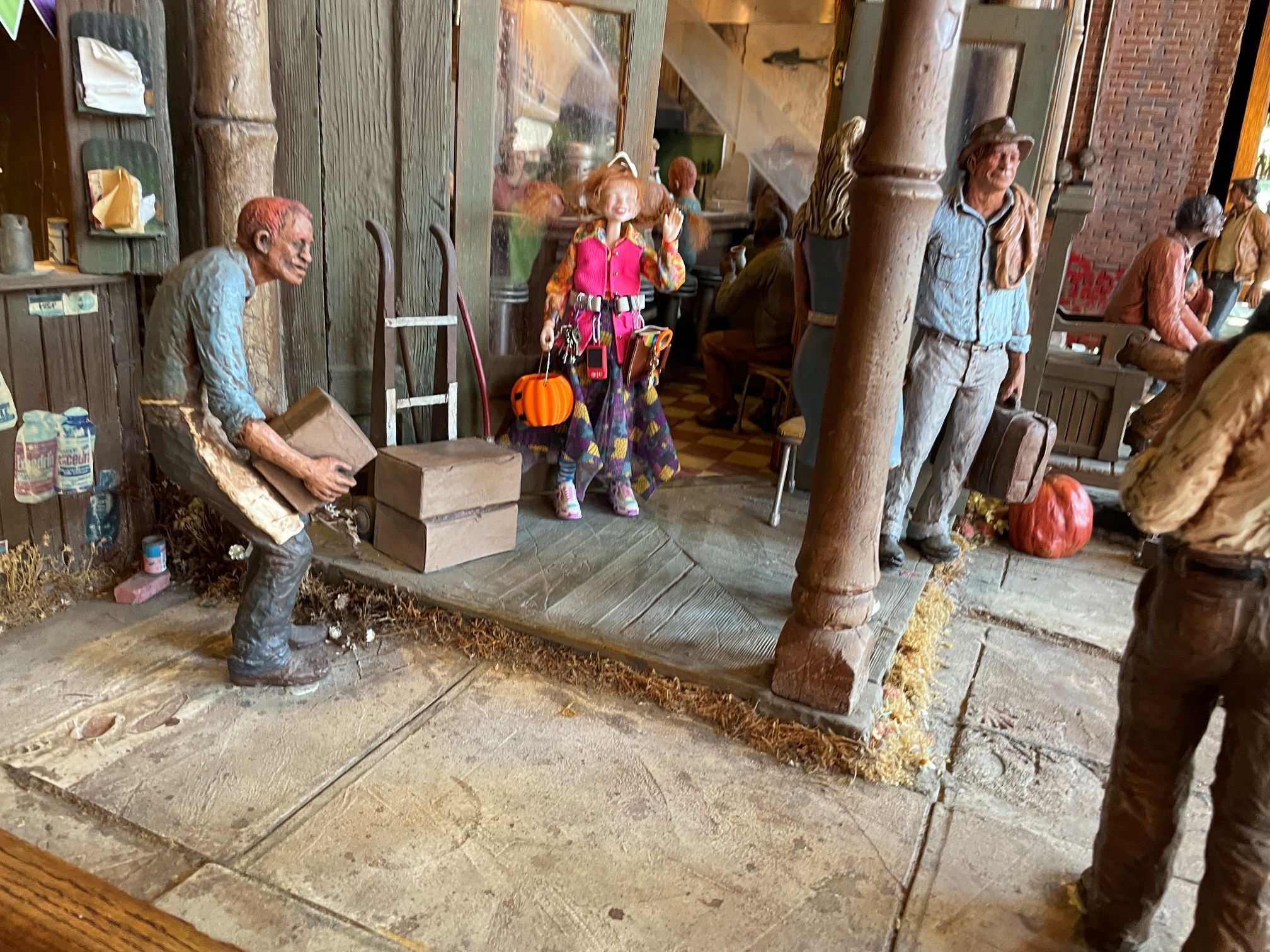
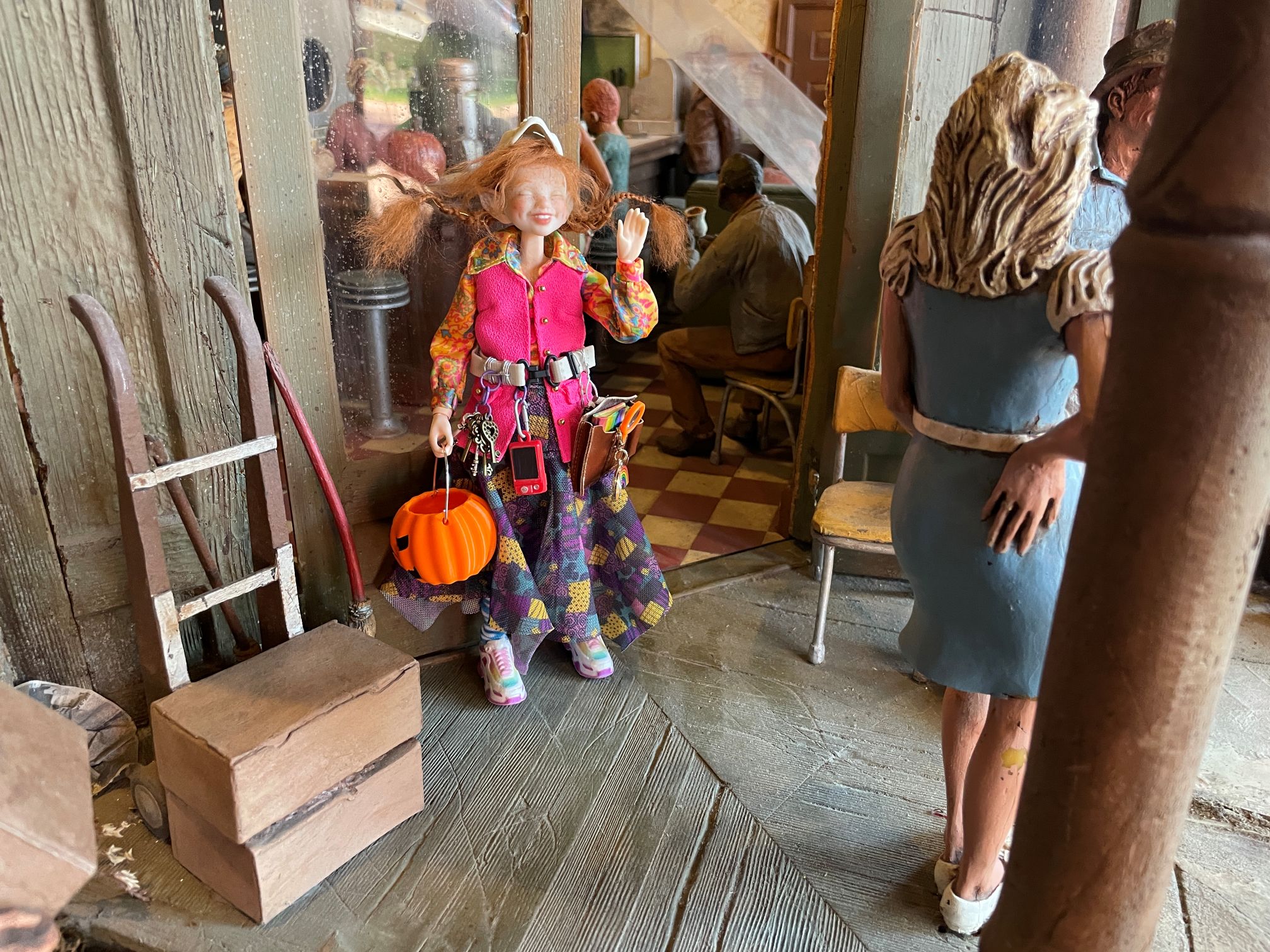
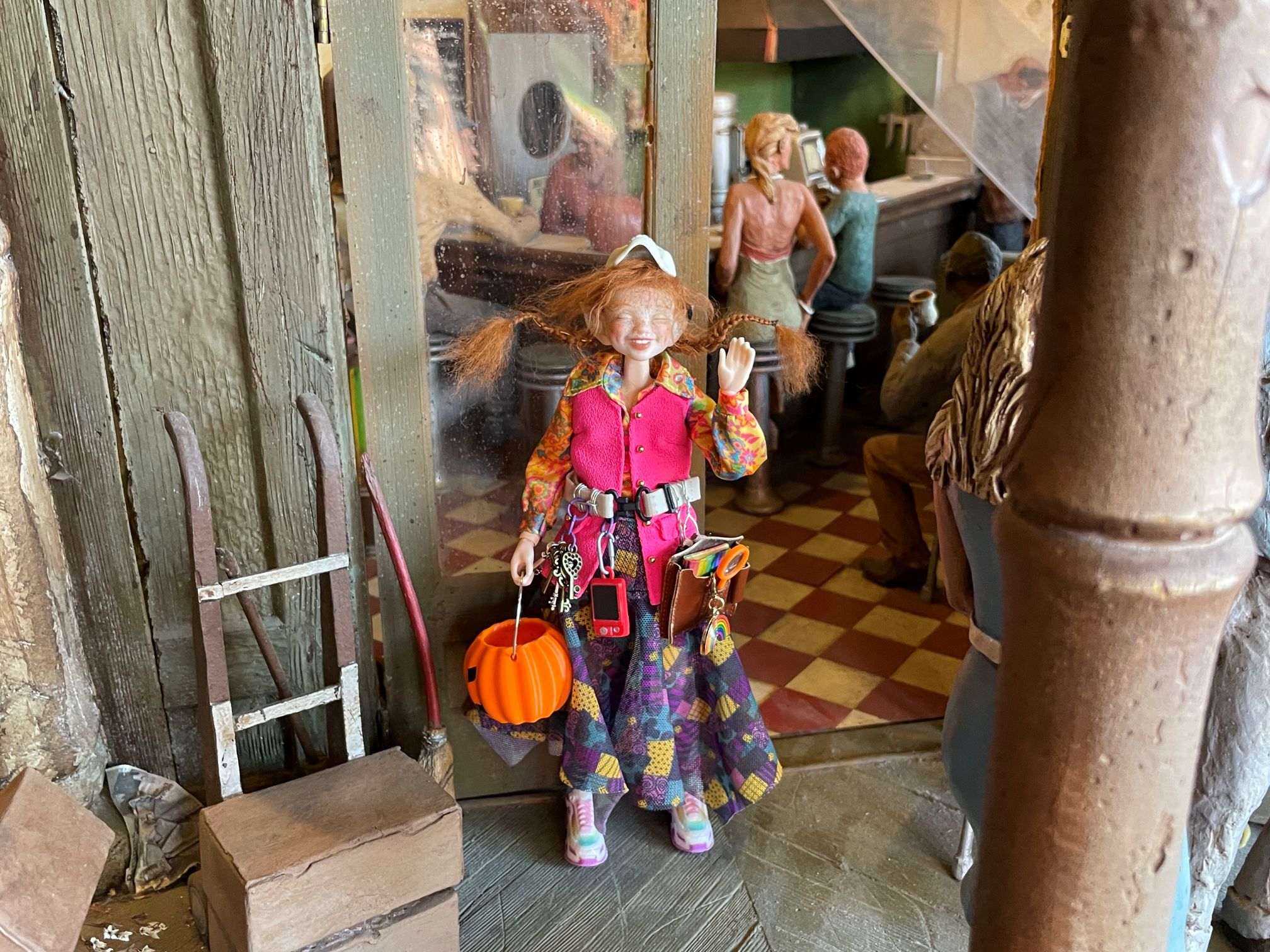
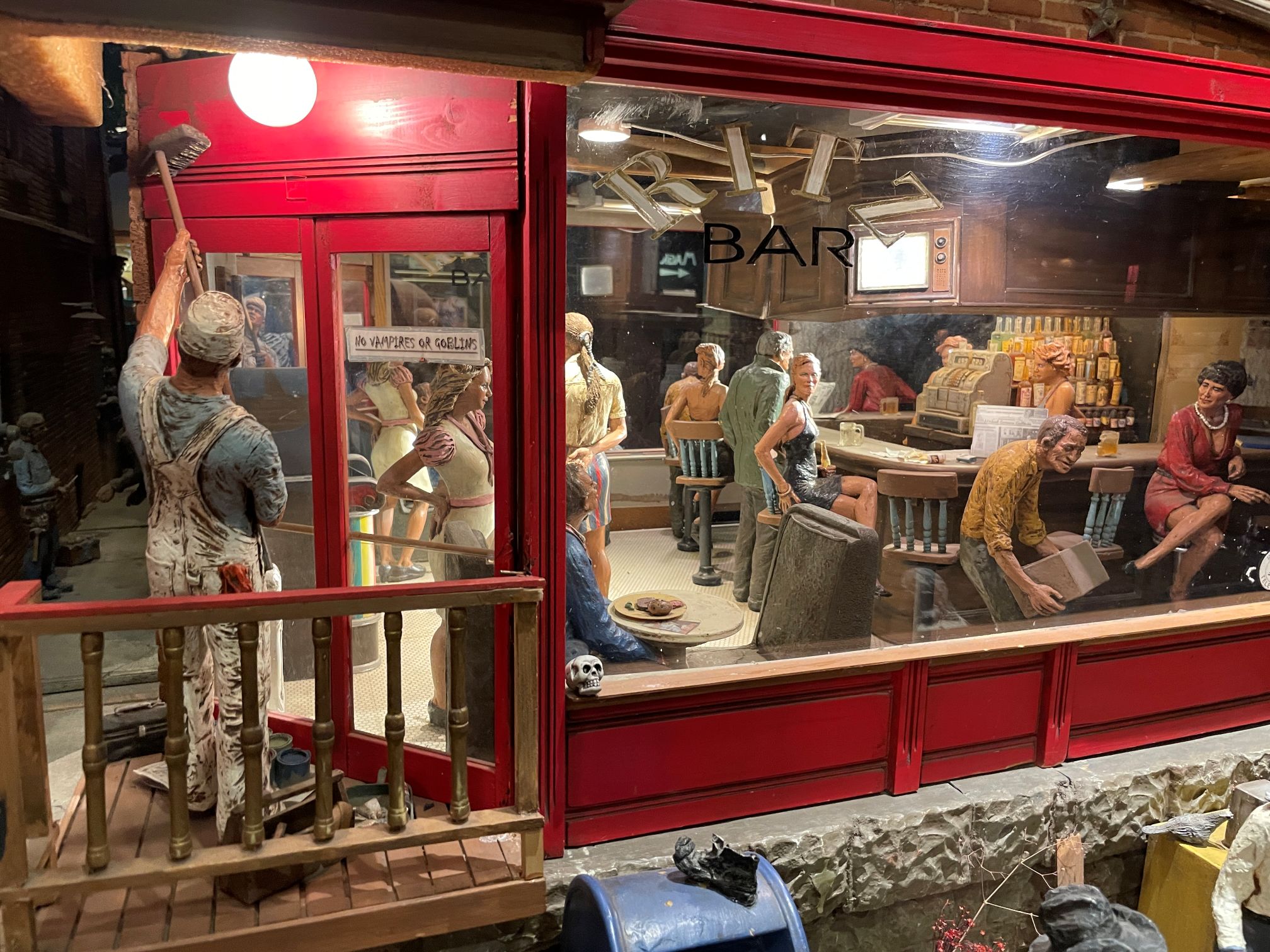
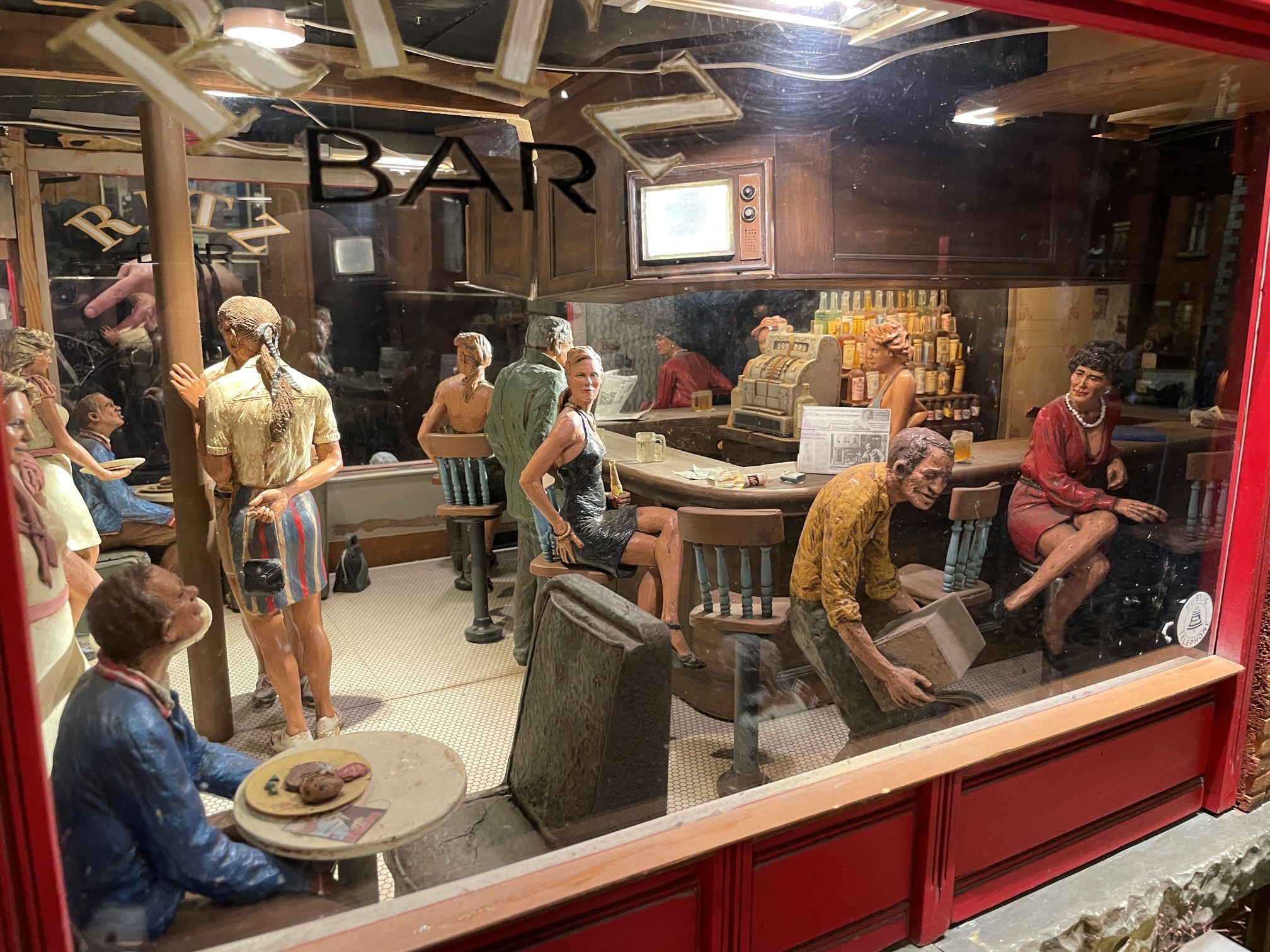
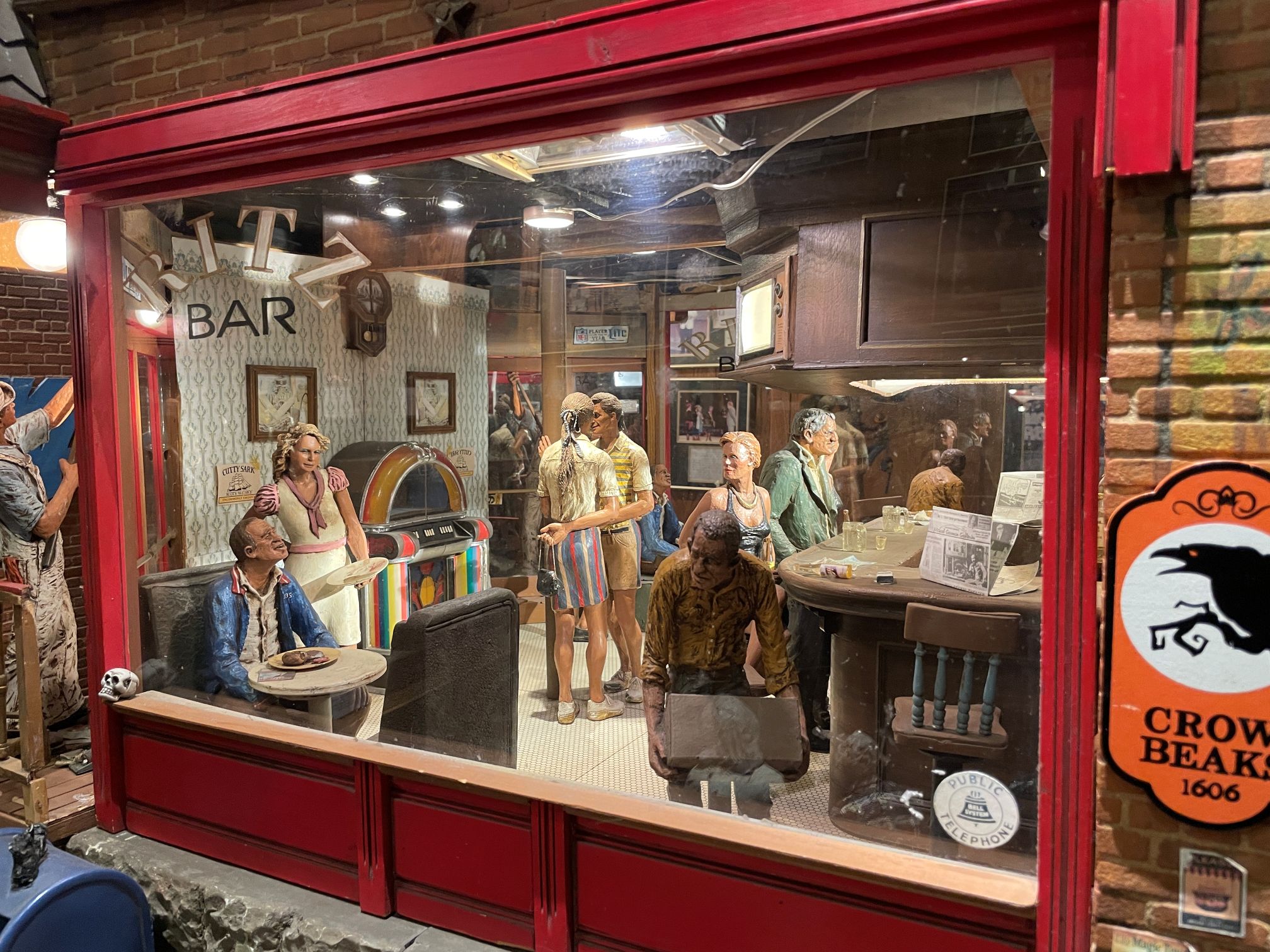
Pippi in “City Life,” another set that breaks down into modular parts for transportation. Note that, in the bar, there is another version of the guy carrying boxes who showed up in the “Ruthie’s Cafe” set.
1 Comment
I am glad you could get to experience this. A different way to do dolls and scenes. Interesting.